Blog
Permanent Bracelets: Airport-Friendly or TSA Headache?

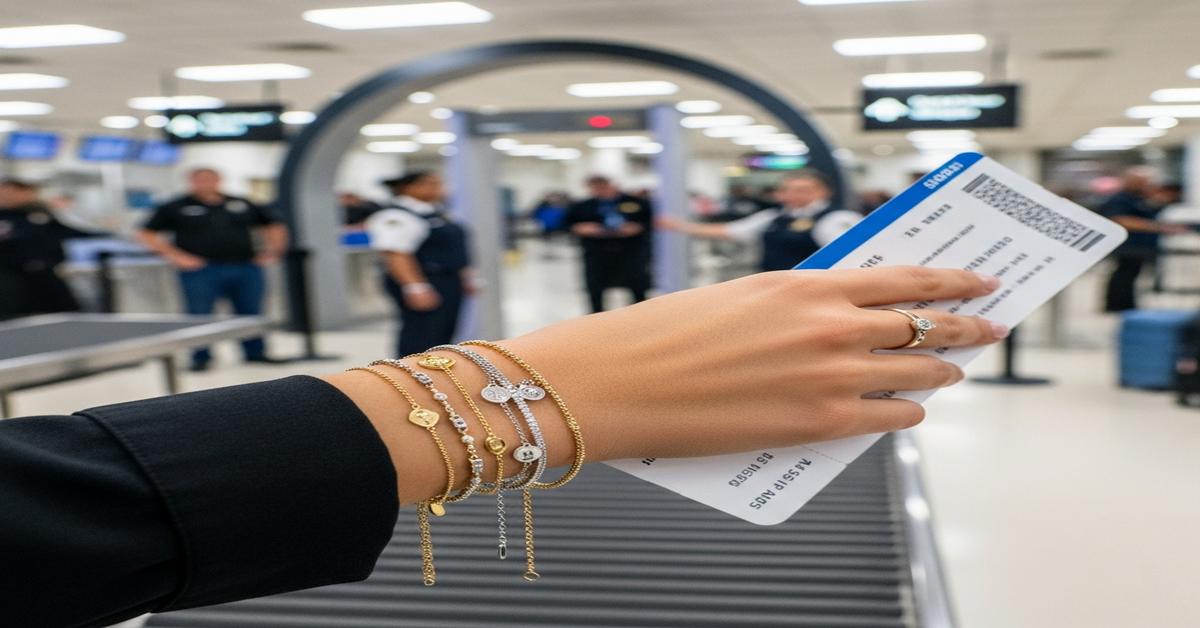
Permanent bracelets—those welded or soldered closed so they cannot be slipped off—look tidy and feel secure. But they pose practical questions when you travel. Airports use metal detectors and body scanners and sometimes need quick access to a wrist. This article explains the screening, the risks for comfort and health, and clear steps to reduce delays or problems at the airport.
How security screening treats jewelry
Airport screening uses two main tools: metal detectors and advanced imaging (millimeter-wave) scanners. Metal detectors respond to conductive metal. Advanced imaging creates a visual map of objects on the body, metal or not. If either machine detects something unusual, security will usually ask you to remove it or perform a secondary screening (pat-down or hand inspection).
Why this matters: A permanently closed bracelet that you cannot remove can trigger an alarm or look like a concealed object on imaging. That means extra time, a hold-up while agents inspect, and possibly a manual search of your wrist.
Material matters — which metals trigger alarms
- Gold (14k, 18k): Gold is conductive. Thin gold chains or small thin bangles (1–2 mm) sometimes pass through without an alarm. Thicker gold (2.5–4 mm) is more likely to register. Higher karat (18k) is softer, but conductivity is similar to 14k.
- Stainless steel and surgical steel: More likely to set off detectors than equivalent gold pieces because of different composition and magnetic properties of some alloys.
- Titanium and platinum: Both are conductive and will show up. Titanium can be less dense, but detectors sense conductivity, not just weight.
- Non-metal materials: Leather, fabric, silicone or resin bracelets won’t trigger metal detectors, but a rigid, non-metallic bracelet can still appear on imaging and cause questions.
Why this matters: Metal detectors sense conductivity and size. A small gold ring might not alarm, while a heavier stainless-steel cuff will. There’s no single threshold, so uncertainty can cause delays.
Health and safety concerns in flight
- Swelling: Long flights commonly bring mild fluid retention. Wrist circumference can grow by several millimetres and, in some people, by 1 cm or more. A welded bracelet fitted snug at departure can become tight enough to impair circulation or pinch skin.
- Medical needs: If you need IV access, wrist bandages, or emergency medical care, a non-removable bracelet can complicate treatment. It can slow care or require cutting by medical staff.
- Allergic reactions: If you experience irritation from an alloy (nickel in some white gold or steel), a permanent bracelet prevents you from removing the source of the allergy quickly.
Why this matters: Flight-related swelling and the possibility of medical events make permanence a real safety concern, not just a convenience issue.
Practical travel strategies
- Do not assume “permanent” means invisible to security: Expect possible secondary screening. Plan time accordingly—arrive early if you wear a welded bracelet.
- Choose the right fit: If you insist on a permanent piece, leave at least 3–5 mm of slack, preferably more if you are prone to swelling. A bracelet sized to allow about 1–2 mm of movement over the top of the wrist is safer. Measure wrist circumference in the afternoon (when it’s largest) before final fitting.
- Consider material choices: A thin 1–1.5 mm yellow gold chain is less likely to alarm than a 6–8 mm stainless-steel cuff. If airport hassle matters, favor soft, non-metallic travel versions and keep your permanent piece at home.
- Carry documentation: A jeweler’s note or receipt stating the bracelet is welded and its metal can help speed inspections. It doesn’t guarantee faster screening, but it clarifies the situation to agents.
- Notify security proactively: When you reach the screening line, tell the TSA/security officer you are wearing a welded bracelet. That lets them plan a hand inspection sooner and avoids repeated alarms.
What to expect from security
Officers can do a pat-down or hand inspection if you can’t remove jewelry. They will not cut jewelry for security purposes. If a detailed search is needed, you may be escorted to a private screening area. International airports and smaller airports may apply rules differently. Some countries may be stricter and ask you to remove jewelry more often.
Why this matters: You should not plan on being permitted to keep a welded bracelet on without inspection. That inspection may add time and require privacy.
Alternatives and final advice
- Travel-friendly options: Use a removable version or a near-identical bracelet with a screw or clasp for flights. For example, a screw-closure bracelet (like some designer “Love” styles) can be removed with the tool and stowed.
- Semi-permanent designs: Ask your jeweler about a discreet safety link or a weak solder joint designed to be cut in emergencies. That preserves look and reduces risk of circulation problems.
- Insurance and documentation: Insure valuable pieces and carry photos and appraisals. If a bracelet must be inspected or cut by medical staff, documentation speeds claims and repair work.
Bottom line: welded, non-removable bracelets are not airport-friendly for frequent travelers. They can trigger alarms, slow you down, and create health or medical complications. If you travel often, pick a removable or travel-specific version, or insist on a looser permanent fit with written emergency instructions and insurance. That keeps your jewelry and your trip stress-free.