Blog
Jewelry and Sunscreen: Which Finishes Hate SPF

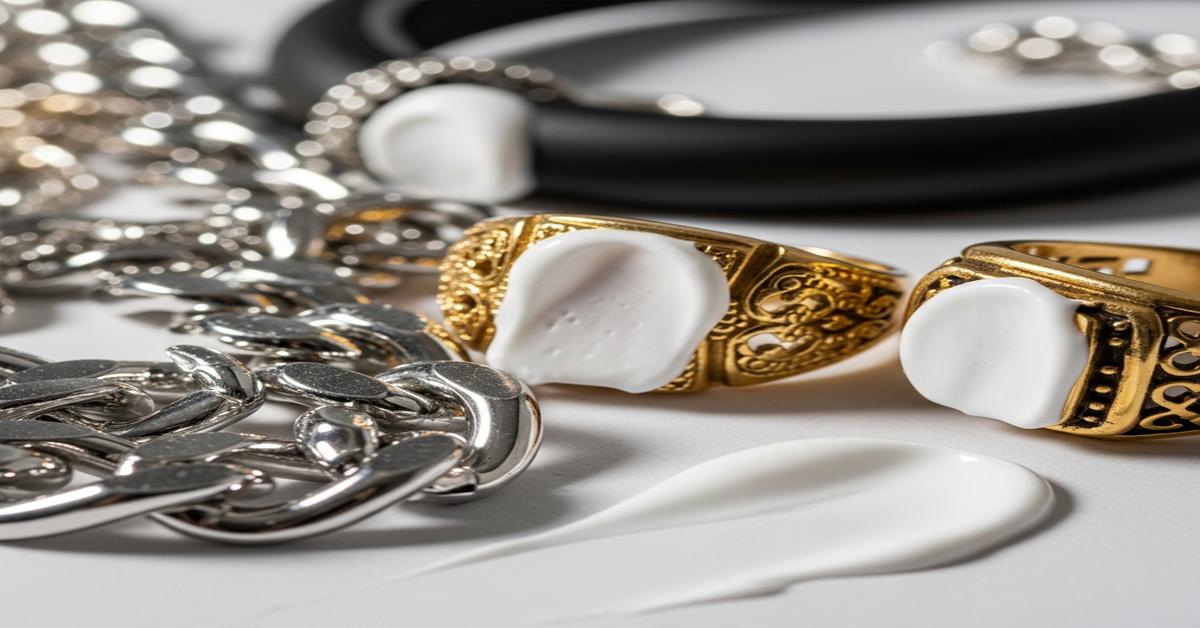
Sunscreen protects skin — but it can be rough on jewelry. Oils, silicones, chemical UV filters and mineral particles in SPF lotions can leave films, change color, strip coatings or trap moisture against metal. Some finishes and gems recover with a quick clean. Others suffer irreversible damage. Below I explain which finishes and materials “hate” SPF, why that happens, and what to do to reduce the harm.
Why sunscreen affects jewelry
Understanding the basic ingredients in sunscreens explains the damage. Typical formulations include:
- Oils and emollients (caprylic/capric triglyceride, various esters) — leave a greasy film that dulls polish and attracts dirt.
- Silicones (dimethicone) — create a persistent slippery layer that is hard to remove with water alone.
- Chemical filters (avobenzone, oxybenzone, octocrylene) — organic molecules dissolved in solvents that can interact with thin metal coatings and adhesives.
- Mineral filters (zinc oxide, titanium dioxide) — tiny abrasive particles that can scratch soft metals and matte finishes if rubbed.
- Preservatives and fragrances — can accelerate discoloration or attack lacquer/varnish on lower-quality pieces.
These ingredients don’t all chemically “attack” metal in the way acid would. More commonly they: leave residues that trap moisture and pollutants (accelerating tarnish), abrade soft finishes, or weaken thin plating and organic coatings. Heat and UV exposure while wearing sunscreen also speed up oxidation and breakdown of delicate finishes.
Finishes and materials that suffer most
- Plated jewelry (gold-plated, rhodium-plated, vermeil vs. heavy plating) — Plating thickness matters. Typical fashion plating is fractions of a micron and will wear off with oils and repeated rubbing. Vermeil (gold ≥2.5 microns over sterling silver) is more durable but still vulnerable to silicones and solvents. Sunscreen residues can make plating look patchy and expose the base metal underneath.
- Oxidized or antiqued finishes — Those darkened patinas are deliberate. Sunscreen can strip or further darken spots unevenly, ruining the intended contrast. Once the patina changes, it’s not easily uniformed again without re-oxidizing professionally.
- Matte, brushed or satin finishes — These textures trap oil and particulates in the tiny grooves. The trapped film darkens the finish and makes wear uneven. Polishing removes texture, so you can’t always restore the original look at home.
- Soft alloys and rose gold (higher copper content) — Rose gold contains more copper (for example: 14k rose ≈ 58.5% Au + ~25% Cu + balance Ag). Copper oxidizes more readily than pure gold; sunscreen residues hold moisture and pollutants against the surface, speeding reddish or brownish discoloration.
- Sterling silver (925) — Silver (92.5% Ag + 7.5% Cu) tarnishes when exposed to sulfides and when kept moist with residues. Sunscreen residues can accelerate tarnish and produce localized dark spots.
Gemstones and settings that are at risk
- Pearls, opals, turquoise, amber, coral — These are porous or organic and absorb oils and solvents in sunscreen. Pearls (calcium carbonate with nacre) and opals can lose luster or develop permanent staining if repeatedly exposed. Wipe them after exposure and avoid direct contact.
- Porous or treated gems — Turquoise and some dyed stones can pick up color shifts from chemical ingredients. Resin-filled or composite gems can have their adhesives softened by solvents and silicones.
- Faceted gems and diamonds — Hard stones won’t be chemically damaged, but oils and silicones form films that reduce sparkle. A clean with warm soapy water restores brilliance for most stones; professional ultrasonic cleaning is fine for unfilled gems but avoid for porous or fracture-filled gems.
- Glue-set settings — Costume jewelry often uses adhesives. Solvents in SPF can dissolve glue, loosening stones.
How to minimize damage
- Apply sunscreen before putting on jewelry. Let lotion fully absorb — 10–15 minutes is a good rule. This reduces transfer of oils and silicones onto metal.
- Remove jewelry during heavy application or when reapplying. Keep rings and bracelets off while rubbing sunscreen into hands and arms.
- Choose durable metals for daily wear. Platinum (Pt 950) and solid 14k–18k gold (14k ≈ 58.5% Au; 18k ≈ 75% Au) are more resistant to surface issues. Solid pieces withstand residue and cleaning better than thin-plated items.
- Prefer vermeil or thicker plating if you want plated white/gold pieces. Vermeil has a minimum gold thickness (≈2.5 microns) over sterling and resists wear more than jewelry with thin flash plating (often <0.5 µm).
- Wipe jewelry after exposure. Use a soft, lint-free cloth to remove oils and residues. For pearls and porous gems, dampen the cloth with plain water only.
Cleaning and repair tips
- Daily cleaning — For most solid metal and durable gemstone jewelry: warm water, mild dish soap, and a soft brush. Rinse and dry thoroughly.
- Plated and delicate pieces — Use only a soft cloth and mild soap. Don’t scrub plating; repeated polishing will wear it away. If plating looks uneven, re-plating by a jeweler is the best fix.
- Pearls and porous gems — Wipe with a damp cloth after wear. Avoid detergents and prolonged soaking. If oily film persists, take them to a pro for gentle cleaning.
- Professional help — For valuable pieces or altered patinas, ask a jeweler. Re-oxidizing, re-plating and secure setting repairs are best done by a professional.
In short: the worst trouble comes from thinly plated, oxidized, textured finishes and porous gems. Solid gold, platinum and properly cleaned faceted stones handle sunscreen better. The simplest protection is habit: apply SPF, let it set, and keep jewelry off while you rub it in. A quick wipe after wear goes a long way to keeping your pieces bright and preventing long-term damage.