Blog
Why White Gold Yellows—And the 20-Minute Fix US Jewelers Use

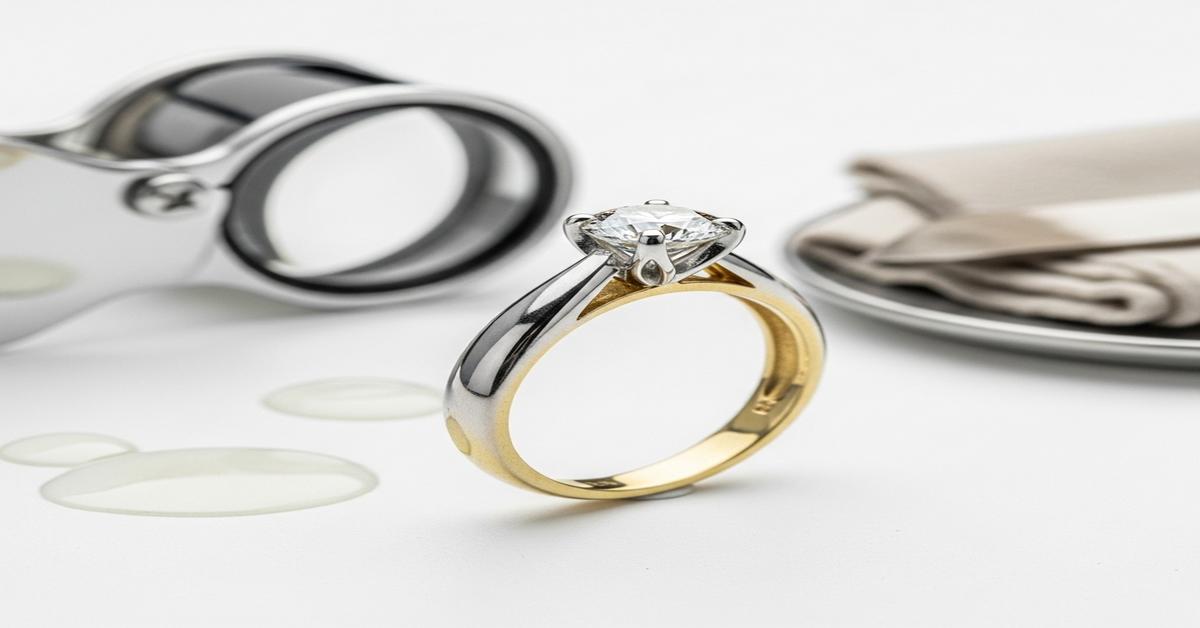
White gold starts out bright white only because jewelers coat it with a thin layer of rhodium. Under that coating the metal is still gold — a naturally yellow metal alloyed with other white metals. Over time that rhodium layer gets thin or wears away, and the warm yellow tint of the gold alloy reappears. Jewelers can remove that yellow look quickly: a routine cleaning, prep and a controlled rhodium electroplating usually takes about 15–30 minutes at a bench. This article explains exactly why white gold yellows, what happens during the 20-minute shop fix, and how long you can expect the result to last.
Why white gold isn’t truly white
Gold is yellow. To make it “white,” manufacturers mix pure gold (24K) with white metals. Common formulas:
- 14K white gold — about 58.3% gold, 41.7% alloy (nickel, copper, zinc). Nickel gives a brighter initial white but can cause allergies.
- 18K white gold — about 75% gold, 25% alloy (often palladium or silver). Higher gold content makes the base alloy more yellow, so it requires heavier plating to look white.
- Palladium white gold — uses palladium instead of nickel; it’s naturally paler but costs more.
Even with those alloys, the metal has a warm undertone. Jewelers apply rhodium — a hard, reflective member of the platinum family — as a surface coat. That coating creates the bright, cool white appearance consumers expect.
How rhodium plating wears and why yellow shows through
Rhodium plating is very thin. Typical thickness for jewelry is between 0.3 and 1.5 microns (0.0003–0.0015 mm). At that scale a small amount of rubbing removes significant coverage. Two main wear mechanisms matter:
- Abrasion: Rings and bracelets rub against hands, countertops, and other jewelry. Constant friction thins the rhodium until the underlying alloy shows through.
- Chemical attack: Soaps, lotions, perfumes, chlorine and household bleaches can soften or dissolve plating, especially if the rhodium is already thin or the piece hasn’t been properly cleaned before plating.
Heat from repairs (soldering) removes rhodium completely, which is why any resizing or solder work requires re-plating afterward. Because the gold alloy beneath is yellow, once plating goes, the yellow returns — sometimes unevenly, making edges and high points look whiter than recessed areas.
What jewelers do in ~20 minutes to make white gold white again
The “20-minute fix” is a real, routine bench job. Steps and typical times:
- Inspection (1–2 min): Check for loose stones, deep scratches, or repairs needed. If repairs are required, rhodium plating is delayed until after fixing.
- Clean and degrease (3–7 min): Ultrasonic or steam cleaning removes oils and residues. Good adhesion requires a spotless surface.
- Polish and rinse (5–8 min): Light polishing evens out surface scratches and knocks down old plating edges so the new coat looks uniform.
- Strike or underplate (optional 2–5 min): Some benches first apply a thin nickel or silver “strike” to improve rhodium adhesion and evenness. This is more common on pieces that show patchy wear.
- Rhodium electroplating (3–10 min): The piece is connected as the cathode in a rhodium bath. Timing controls the thickness — longer plating yields thicker coat but costs more in material and time.
- Final rinse and buff (1–2 min): Rinse to remove bath residue and hand-buff to the right luster.
If a jeweler has a steady workflow and the piece needs no repair, the core procedure is commonly finished in about 15–30 minutes. The most time-consuming parts — cleaning and polishing — are what make the plating last and look even.
How long the rhodium lasts — realistic expectations
There’s no single answer. Useful ranges:
- Daily-wear rings (engagement rings): expect 6–18 months from a 0.5–1.0 µm coat. High contact areas will show yellow faster.
- Occasional-wear jewelry (pendants, earrings): 2–5 years is common because they see less abrasion.
- Thicker plating (1.5 µm or more): can extend life, but costs and time increase. Extremely thick plating (>2 µm) is rare due to cost and diminished return.
Factors that shorten life: frequent handwashing, lotions, chlorinated pools, hot tubs, household cleaning chemicals, and physical work. Heat from repairs removes plating altogether.
Alternatives and practical care advice
- Choose a different metal: Palladium white gold or platinum doesn’t need rhodium plating. Platinum is naturally white, durable, and hypoallergenic, but heavier and more expensive.
- Ask about alloy composition: If you react to nickel, choose palladium-based white gold or confirm the piece is nickel-free.
- Routine maintenance: Remove rings for heavy work, avoid bleach and harsh cleaners, apply lotions before putting jewelry on, and clean gently with mild soap and water.
- Replating schedule: For an engagement ring worn every day, plan on a replate every 6–18 months depending on wear. For occasional pieces, every 2–3 years is typical.
- Don’t DIY with household methods: Proper rhodium baths and waste disposal are professional processes. Home kits are unreliable and can damage stones or settings.
Costs vary by region and jeweler. A typical rhodium replate for a ring might run from around $40 to $150. Ask the shop whether their quote includes cleaning, polishing, and a specified microns thickness — those details affect how long the result lasts.
In short: white gold yellows because the thin rhodium layer that makes it “white” wears away, exposing the yellowish gold alloy beneath. The fix is fast because proper cleaning, polishing and controlled rhodium electroplating are routine bench procedures. Understanding alloy type, plating thickness, and your own wear habits lets you plan maintenance and choose metals that better match your lifestyle and sensitivity needs.