Blog
14K vs 18K: The Scratch Test You’ll Wish You Tried Before Buying

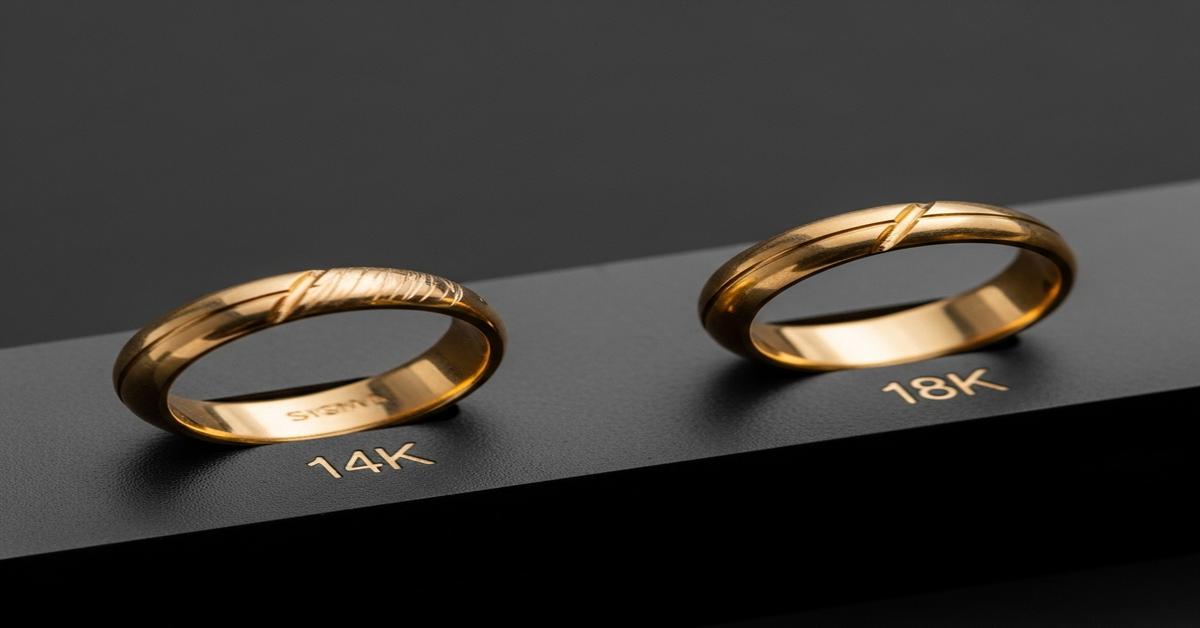
If you’re deciding between 14K and 18K gold, scratch resistance matters. It affects how a ring wears, how often a band needs polishing, and how secure small prongs stay over years. This article explains what karats mean for hardness, how to run a safe scratch check, and how to interpret the results so you buy the right piece for everyday life.
What the numbers mean: 14K vs 18K
Karat measures gold purity. Pure gold is 24K. That makes:
- 18K = 75% gold and 25% other metals (75/100 or 18/24).
- 14K = 58.3% gold and 41.7% other metals (14/24).
Those “other metals” are the reason 14K is harder. Typical alloys include copper, silver, nickel, palladium and zinc. A common 18K yellow mix might be roughly 75% Au, 12.5% Cu, 12.5% Ag. A 14K yellow sample might be 58.3% Au, 26% Cu, 15.7% Ag. White gold swaps in nickel or palladium to remove yellow hues, and that changes hardness too.
Why scratch resistance matters
Gold’s softness affects real things:
- Prong wear: Softer gold loses metal faster. Thin prongs on 18K will show notches sooner than on 14K. That can loosen stones.
- Surface finish: High-polish 18K shows scuffs faster. 14K keeps a polished look longer on everyday jewelry like wedding bands and chains.
- Repair and resizing: Softer alloys are easier to reshape. But that also means they dent more easily during normal wear.
How to do a safe scratch test
Do not scratch visible surfaces on a piece you intend to buy. Many sellers will refuse, or the mark will lower resale value. Use these safe steps instead.
- Ask the seller to test it for you. A reputable shop will perform tests on an interior surface or show sample swatches.
- Use an inconspicuous spot. If you must inspect yourself, look inside the band or under a clasp. These areas are normally unseen and easier to touch up.
- Perform a light yield test. With the seller’s permission, ask them to press a jeweler’s steel pick or scribe gently against the inside of the shank. The test is not about deep gouges — it’s about feel. Softer gold will deform or show a small visible mark immediately with light pressure. Harder alloys resist and only show a faint line made by harder steel.
- Compare to reference samples. The best single test: compare the mystery piece to known 14K and 18K samples side by side. Many jewelers carry stamped scrap pieces or sample rings. If the unknown piece behaves like the 14K sample, it’s likely 14K.
Do not use excessive force, files, or carbide scribes on jewelry you might buy. Those cause permanent damage. If a seller refuses testing, ask for documentation or an XRF/acid test result.
Other, safer tests to request
- Hallmark inspection: Look for stamped marks: “585” or “14K” for 14-karat, “750” or “18K” for 18-karat. Stamps can be polished off, so they are helpful but not definitive.
- Touchstone/acid test: The jeweler rubs the metal on a stone and applies acids. This removes little or no metal from the piece itself when done correctly.
- XRF analysis: Non-destructive and fast. X-ray fluorescence gives a composition readout in seconds. Many reputable sellers will provide a printout if requested.
- Specific gravity test: Measures density. It’s reliable for solid pieces and less affected by plating. It needs equipment and a small amount of handling by a pro.
How to read the results
If the metal yields easily to light pressure and shows a visible deformation, it’s a sign the piece is higher in gold content — likely 18K or 22K. If it resists and only a harder steel tip makes a fine mark, it’s more likely 14K or a 14K-based white gold with nickel. Keep two cautions in mind:
- Plating hides the metal: Rhodium-plated white gold or gold-plated jewelry will mask the base metal. A scratch through plating reveals the base color and can change your reading.
- Design and finishing matter: Satin or brushed finishes hide scratches differently than a mirror polish. A hard surface finish can feel more scratch-resistant than the alloy actually is.
Practical buying guidelines
- Everyday wear (engagement ring, wedding band, watch): Prefer 14K for durability. It holds prongs and resists dents better. Example: a 2.5 mm wedding band in 14K will keep a polished look longer than the same band in 18K.
- Color and luxury (high-end jewelry, colored stones): Choose 18K for richer yellow or deeper rose tones. The extra gold gives a warmer color that photographs and ages well.
- White gold choice: If you’re allergic to nickel, choose 18K white gold with palladium or 18K palladium alloys. 14K white with nickel is harder, but can cause skin reactions for some people.
- Small pavé or thin prongs: Use 14K. Tiny metal parts wear down faster in softer alloys.
Final checks before you buy
Always ask for documentation. Request a hallmark inspection, an XRF printout if possible, and a guarantee that visible repairs or tests will be corrected if you buy the piece. If a seller balks at any of this, pause. A brief, careful scratch check on an interior surface or a comparison with reference samples is a quick, practical step that tells you about long-term wear — and will likely save you time and repair costs later.