Blog
Ruby Rings Meaning Style Durability and Ethical Sourcing

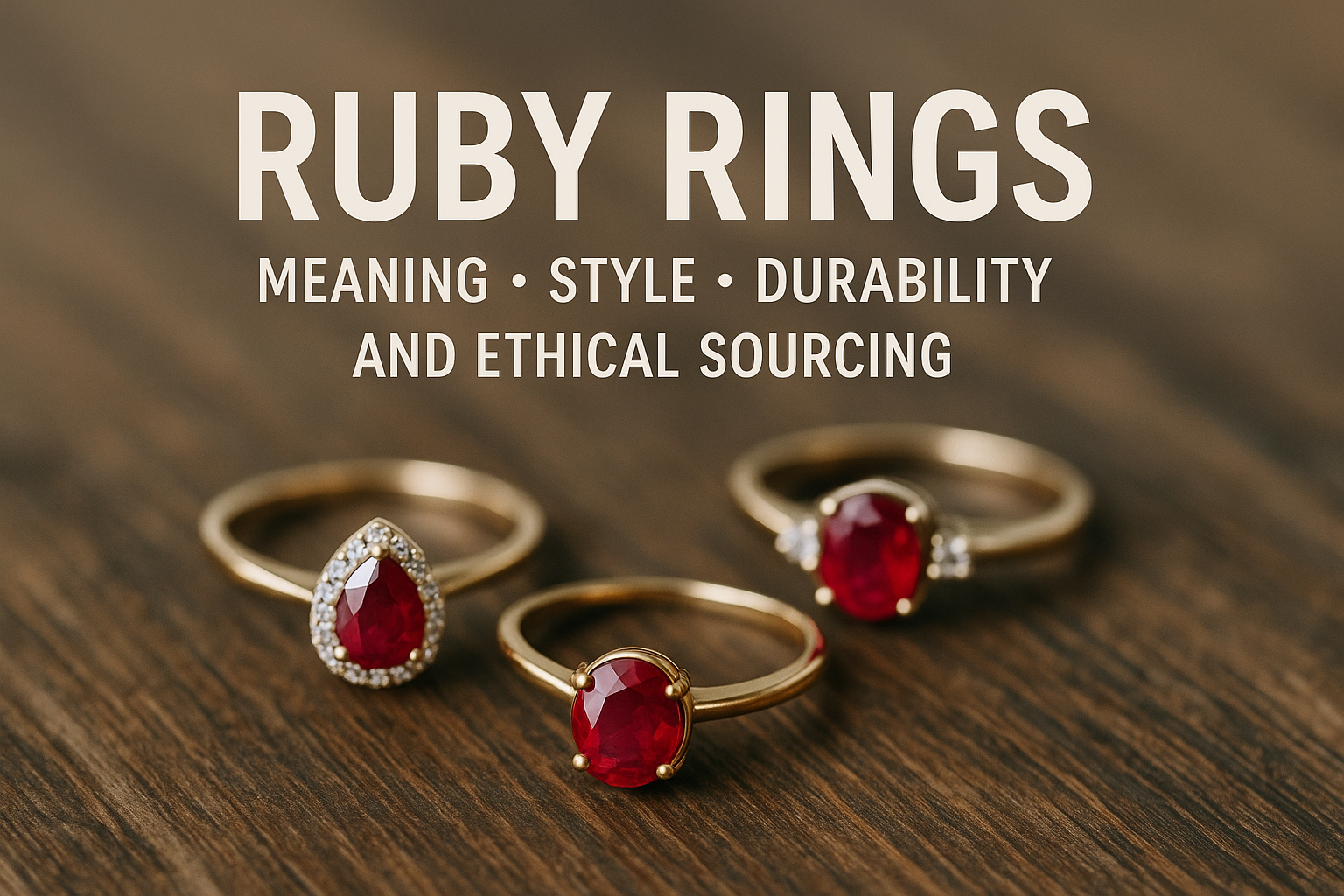
Ruby rings are far more than vivid red accessories. From royal courts to modern wardrobes, rubies symbolize passion, protection, and prestige while offering surprising practicality for everyday wear. This guide explains why wearing a ruby ring is worth considering—covering the gem’s cultural depth, durability and style advantages, plus expert tips on choosing ethically sourced stones and caring for them for a lifetime.
Why Ruby Rings Captivate: Meaning, History, and Personal Significance
Across civilizations, rubies have stood for life-force and leadership. Ancient South and Southeast Asian rulers prized Burmese rubies as talismans of courage. European nobility set rubies into signets to signify authority. In many traditions, rubies are linked with the heart and love—hence their role in the 40th “ruby anniversary” and as July’s birthstone.
Symbolically, ruby rings signal emotional vitality and commitment. Their saturated red recalls warmth, devotion, and the spark that animates relationships and personal goals. In Vedic astrology, rubies are associated with the Sun (Surya) and are believed by some to support confidence and clarity; while such beliefs are personal, many wearers appreciate the intention a ruby ring carries.
Beyond symbolism, rubies are part of the corundum family (with sapphire), celebrated for enduring beauty. Fine rubies display a rich, vivid red that remains mesmerizing in different lighting, often with a subtle blue undertone that keeps the color from looking orangey. This sensual color, paired with historical prestige, makes a ruby ring a statement piece that feels both timeless and contemporary.
Practical Reasons to Wear a Ruby Ring: Durability, Style, and Value
Everyday resilience. With a hardness of 9 on the Mohs scale, rubies are second only to diamond among natural gemstones commonly worn in rings. That means fewer scratches, excellent longevity, and suitability for daily wear—particularly in protective settings such as bezels or low-profile halos.
Style versatility. Ruby rings shift seamlessly from office to evening. The color flatters every skin tone and pairs beautifully with different metals:
- Yellow gold emphasizes ruby’s warmth for a regal, vintage feel.
- White gold or platinum creates crisp contrast that intensifies red saturation.
- Rose gold adds a romantic, modern glow without dulling the stone.
Design-wise, rubies excel as center stones, in three-stone rings (with diamond side stones), or as eternity bands for stacking. Their bold hue reads as intentional and refined, making a single ruby ring a complete look.
Heritage and investment potential. Fine rubies—especially vivid, well-cut stones with minimal treatments—are scarce, and prices reflect that rarity. Historically, top-quality rubies from Myanmar (Burma) and Mozambique have held or increased value. While no gemstone purchase guarantees returns, a thoughtfully selected ruby ring can be both a wearable heirloom and a store of value.
Ethical and sustainable options. Today’s buyers can prioritize values as well as beauty. Seek responsibly sourced rubies from suppliers with transparent chains of custody or Responsible Jewellery Council affiliations. High-quality lab-grown rubies, chemically identical to natural corundum, offer superb color and clarity at lower cost and with minimal environmental footprint.
How to Choose the Right Ruby Ring (and Care for It)
Color first. The most prized ruby color is a vivid, pure red with a slight blue undertone—often called pigeon’s blood. Watch for brightness and saturation under daylight and indoor lighting. Avoid stones that look brownish or overly dark; a well-cut ruby should appear lively, not inky.
Clarity and cut. Natural rubies often show minute inclusions (sometimes “silk” from rutile needles). Light inclusions are acceptable if color and brilliance are strong. Prioritize well-proportioned cuts (oval and cushion cuts are classics) that avoid windowing (a see-through center) and maximize even color distribution.
Carat and budget. Prices jump at key size thresholds. A slightly smaller but better-colored stone usually outshines a larger, darker one. Focus on visual impact rather than carat alone.
Treatments and transparency. Most rubies are heat-treated to improve color and clarity; this is stable and widely accepted. Be cautious with heavily fracture-filled or glass-filled rubies, which can be more fragile and require special care; always request full disclosure in writing.
Certification and trust. For significant purchases, ask for a laboratory report from respected labs such as GIA, AGL, SSEF, or Gübelin. Reports can identify treatments and sometimes origin—useful for valuation and peace of mind. Buy from jewelers who offer return windows and clear policies.
Setting matters. Choose a design that suits your lifestyle:
- Bezel or low-profile solitaire for active wearers who want protection.
- Halo with diamonds to amplify sparkle and protect the ruby’s edges.
- Three-stone rings for added presence and symbolic meaning (past–present–future).
Care and maintenance. Clean with warm water, mild soap, and a soft brush; rinse thoroughly. Ultrasonic cleaners are generally safe for untreated or heat-treated rubies but avoid them for fracture-filled stones. Keep rubies away from harsh chemicals, store separately to prevent scratches, and have prongs inspected annually to secure the setting.
Conclusion
We wear ruby rings because they unite meaning, beauty, and utility: a storied symbol of love and courage; a durable, daily-wear gemstone; and a piece that elevates any outfit while holding long-term value. Choose vivid color, ethical sourcing, and a protective setting, then care for it well. The result is a ruby ring that becomes personal—an heirloom you’ll reach for every day.