Blog
Spinel’s Secret: Why It Faces Up Bigger Than Sapphire at the Same Carat

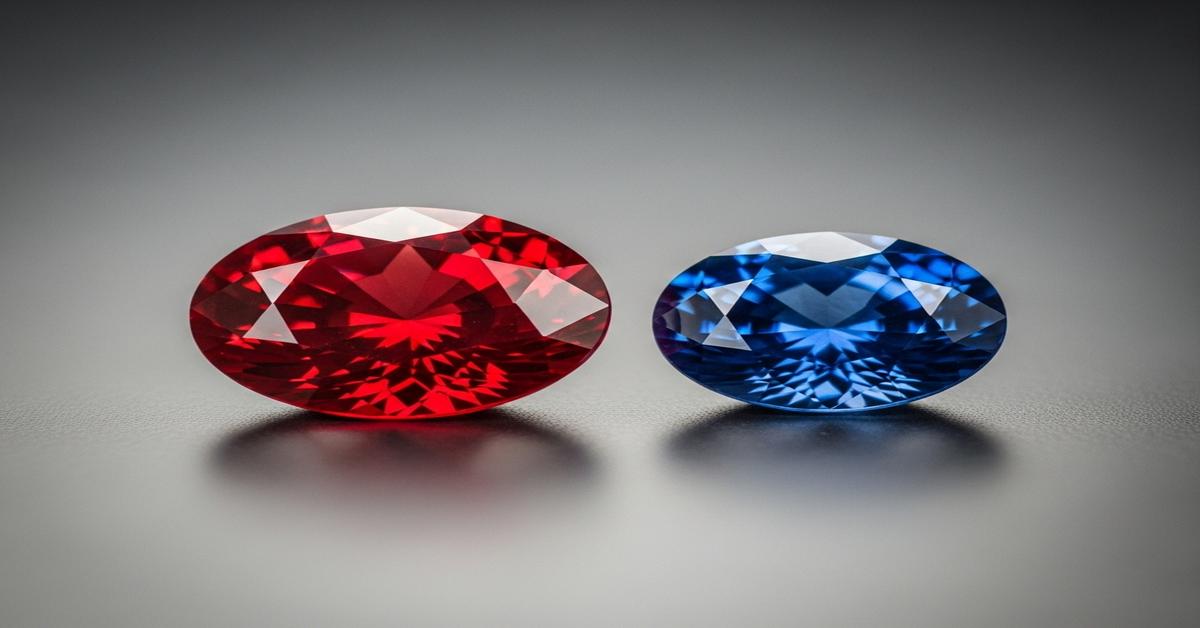
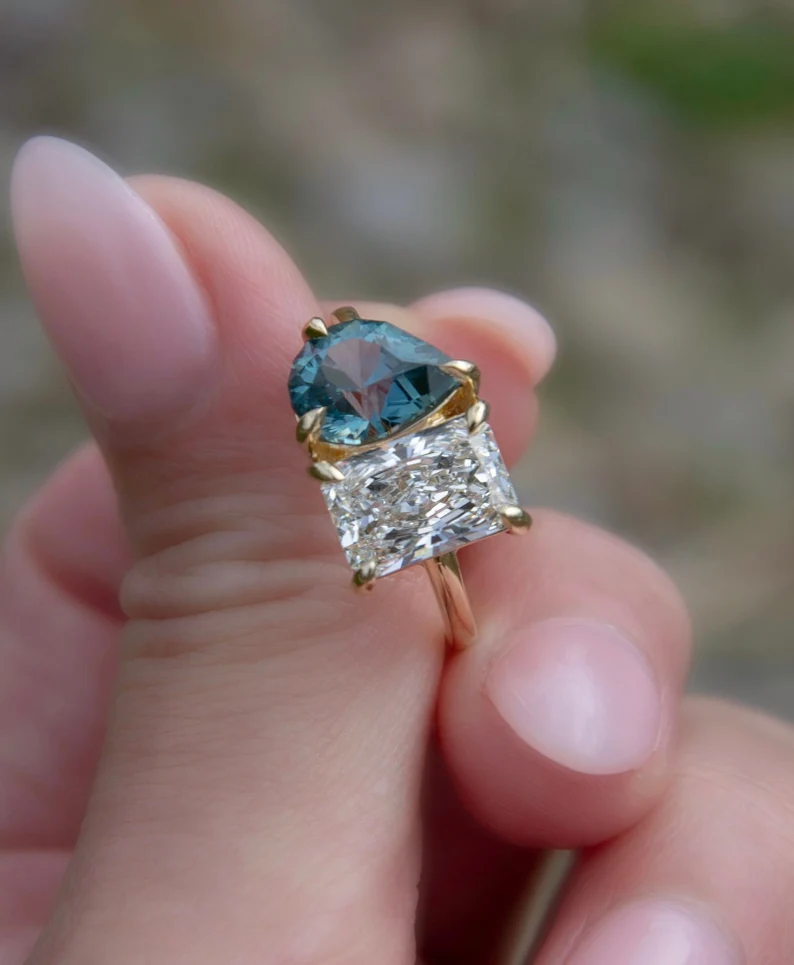
Spinel often looks bigger than a sapphire even when both weigh the same in carats. That surprise comes down to physics and cutting choices, not magic. Carat measures mass. Visual size is about volume, shape and how the cutter orients the crystal. Spinel’s material properties and the way it’s cut usually give it a larger face-up appearance than corundum (sapphire/ruby) of the same carat weight.
Density (specific gravity) is the main reason. Carat is a unit of mass. Volume = mass / density. Spinel’s specific gravity (SG) is about 3.58–3.63. Sapphire (corundum) runs roughly 3.98–4.06. For the same mass, the lower-density gem occupies more volume. More volume means a larger table and greater diameter when cut similarly.
Put in simple math: for the same carat, the volume ratio equals SG(sapphire)/SG(spinel). Using mid-range values (SG corundum = 4.00, SG spinel = 3.60), a spinel’s volume is about 1.11 times the sapphire’s — roughly 11% more. Linear dimensions (diameter) scale with the cube root of volume, so diameter grows by about (1.11)^(1/3) ≈ 3.6% larger. That sounds small, but in jewelry a few tenths of a millimeter changes how “big” a stone looks.
Example: If a 1.00 ct sapphire round measures 6.00 mm across, a 1.00 ct spinel of the same cut proportions would be about 6.22 mm. For larger stones the difference becomes more noticeable: a 5 ct sapphire at 10.00 mm would correspond to about 10.36 mm for spinel at equal carat weight.
Cutting style and crystal behavior add a second, often larger effect. Spinel is cubic and isotropic. That means it does not show pleochroism — its color looks the same from every direction. Cutters can orient a spinel to maximize spread and table size without losing color. They can also use shallower pavilion angles and a larger table to make the gem sit “bigger” face-up while keeping good brightness.
Corundum (sapphire) is trigonal and usually pleochroic. Color can vary by crystal axis. To get the best face color, cutters often orient sapphires so the strongest color shows through the table. That can force deeper cuts, narrower tables or unusual proportions. A deeper pavilion or smaller table reduces face-up diameter even if the stone keeps the same carat weight.
Inclusions and rough-shape economics matter, too. Spinel rough commonly forms clean octahedral crystals. That gives cutters more freedom to plan shapes with minimal waste. Many spinels are clean enough to be cut shallow and wide. Corundum crystals often show zoning, silk or fractures. Cutters sometimes leave extra depth or thicker girdles to preserve color or avoid breaking the stone. Those decisions reduce the visible spread for the same carat weight.
Optical properties influence cutter choices and perceived size. Spinel has a refractive index (RI) around 1.72–1.73. Sapphire’s RI is higher, around 1.76–1.77 and it shows slight birefringence. A higher RI increases light return and sparkle, which is good for brilliance but doesn’t increase face-up diameter. However, because spinel is isotropic and predictable optically, cutters can favor shallow, wide proportions that enhance spread without badly hurting performance. With sapphire, cutters are often balancing color, pleochroism and brilliance — a compromise that can produce deeper, smaller-looking tables.
Practical size comparisons (approximate, for round cuts):
- 1.0 ct — Typical sapphire diameter ~5.8–6.0 mm. Comparable spinel ~6.0–6.3 mm.
- 2.0 ct — Typical sapphire diameter ~8.0–8.2 mm. Comparable spinel ~8.3–8.5 mm.
- 5.0 ct — Typical sapphire diameter ~10.0–10.2 mm. Comparable spinel ~10.3–10.6 mm.
These figures are approximate because final size depends on cut proportions, pavilion depth, table size and the cutter’s goals. The math above explains the intrinsic advantage spinel has. Cutting practices and rough shape often widen that advantage in the finished gem.
What this means if you’re buying:
- Ask for millimeter measurements, not just carat. A jeweler who lists both table diameter and depth percentage helps you compare face-up presence.
- If you want maximum visual size for a budget, spinel is a good choice. For example, a 2 ct spinel will often look larger face-up than a 2 ct blue sapphire, and usually costs less per carat.
- If hardness and wear-resistance are priorities, remember corundum is Mohs 9 vs spinel’s Mohs 8. Both are durable for everyday wear, but sapphire resists scratching better.
- Inspect orientation and photos. A shallow-cut spinel with a wide table will look big but may show lower brilliance from certain angles. A deeper sapphire may look smaller but show richer color and stronger brilliance.
Questions to ask a cutter or seller: request the stone’s dimensions in mm, the depth and table percentages, and a face-up photograph on a neutral background. For sapphires, ask how the stone was oriented when cut (to control pleochroism). For spinel, ask if the cutter prioritized spread or brilliance.
Bottom line: spinel faces up bigger than sapphire at the same carat mainly because it’s less dense, so it occupies more volume for the same mass. Cutters also exploit spinel’s isotropic behavior and often cut it shallower or with larger tables, which further increases face-up size. Know both the millimeter measurements and the cut intent when you compare stones — carat alone won’t tell you how “big” a gem will look on the finger.