Blog
Depth % and Table %: The Two Numbers That Quietly Shrink Your Stone

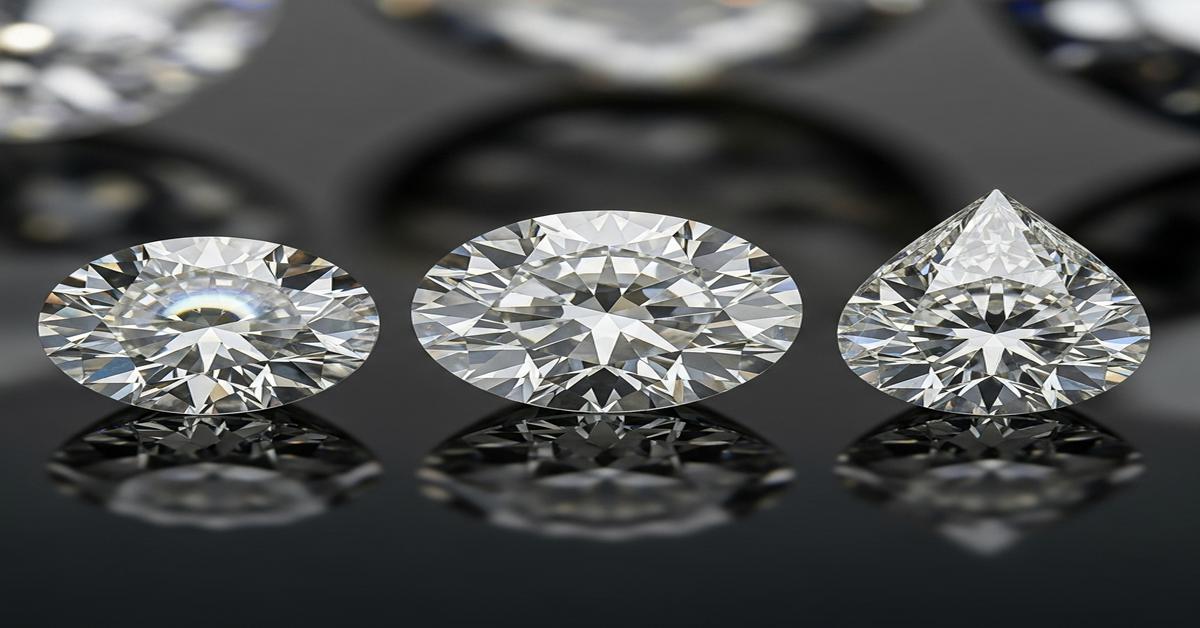
When you shop for a diamond, you often look at carat, color, and clarity. Those are important, but two small numbers on a lab report — depth % and table % — quietly determine how much of the diamond’s carat weight shows as the round face you wear. These percentages don’t just change appearance. They change the stone’s diameter in millimeters, its brightness, and whether the light comes back to your eye or leaks away. Understanding them prevents paying for weight that lives deep inside the stone instead of on the face.
Depth % and Table %: The Two Numbers That Quietly Shrink Your Stone
What they are, in plain math
Depth % = (overall depth ÷ average girdle diameter) × 100. For a round brilliant, that means depth in millimeters divided by the measured diameter, times 100. Depth includes crown, girdle, and pavilion. Table % = (table width ÷ average girdle diameter) × 100. The table is the big flat facet on top. Both numbers are printed on GIA, AGS and other grading reports.
Why these percentages matter
- Face-up size (spread): A diamond’s carat measures weight, not diameter. If you keep carat constant, a shallower stone spreads its weight out and makes a larger diameter. A deeper stone concentrates weight vertically and looks smaller face-up. That means two 1.00 ct rounds can look notably different: one may appear about 6.5 mm across; another, deeper one may be closer to 6.2 mm. You pay the same carat weight but see less surface.
- Light performance: Table and depth shape how light travels inside the gem. Too shallow and light escapes out the bottom or produces a “fisheye” — a pale circular area. Too deep and light dives into the pavilion and produces a dark center or “nail-head” look. The right balance returns the most brightness and fire.
- Trade-offs: Bigger face-up size is not always better if light performance suffers. A very shallow stone may look large but dull. A deeper stone may sparkle but appear smaller.
Typical ranges and what they mean
Ranges depend on shape. Below are practical targets and what to expect.
- Round brilliant (most common): Table ~52–58%, Depth ~58–62.5%. A classic Tolkowsky-style balance sits near 53% table and 59–60% depth and yields good balance of brilliance and spread. If depth moves above ~63% the diameter drops noticeably; below ~57% the risk of light leakage rises.
- Princess: Table ~65–75%, Depth ~68–76%. Princess cuts rely on different facet geometry; larger tables are normal. Higher depth can still reduce face-up spread, but the appearance is more sensitive to pavilion height.
- Step cuts (emerald, asscher): Table often 60–85%, Depth 60–70%. These cuts emphasize clarity and broad flashes rather than many scintillating facets. Large tables are normal; look for good depth to avoid a thin, lifeless face.
- Other fancy shapes: Each shape (oval, marquise, pear) has ideal ranges and often a length-to-width ratio guideline. For ovals and marquises, a shallower depth can make a stone look long and large, but beware of “bow-tie” dark areas if proportions aren’t balanced.
Real examples — how numbers affect a 1.00 ct round
Two practical examples show the point (approximate values for illustration):
- Stone A — Depth 59.5%, Table 55%: diameter ~6.5 mm. This sits in the classic “ideal” band, giving good spread and strong light return. It looks balanced and bright.
- Stone B — Depth 64%, Table 58%: diameter ~6.2 mm. Same 1.00 ct weight, but more weight is below the girdle. The stone will appear smaller from above and can look darker in the center unless angles compensate.
These are approximate millimeter differences, but a few tenths of a millimeter translate into a visible size gap on the finger.
How table % changes what you see
- Small table (under ~52% on rounds): May increase scintillation (sparkle flashes) and fire because more crown facets break up light. But a very small table can reduce overall brightness and look too “busy.”
- Large table (over ~58% on rounds): Gives a broad window to the pavilion. That can increase face-up brightness for some angle combinations but reduces the amount of fire (colored flashes). Very large tables also make imperfections easier to see.
Practical buying rules — what to ask and check
- Always ask for the lab report (GIA, AGS preferred). The report lists depth % and table % and shows diameter in millimeters for rounds. Compare the mm diameter to carat: a 1.00 ct round typically measures ~6.4–6.5 mm when well-proportioned.
- For the same carat, prefer the larger diameter if the cut proportions and light performance are good. Ask for ASET, IdealScope images, or a video to confirm light return. Numbers alone don’t tell the whole story.
- If you want maximum face-up size on a budget, you can accept a slightly shallower depth (near 57–58% for rounds). But test it visually first — too shallow can look dull or show a ringed “fisheye.”
- If you prioritize sparkle over spread, choose slightly deeper but well-angled stones (within the 59–62% round range) that show strong light return on scope images.
- For fancy shapes, treat table % and depth % as starting points. Also check length-to-width ratios and ask for facet maps or photos on a white and dark background to judge the bow-tie effect or light leakage.
Final note — percentages are tools, not the whole story
Depth % and table % are simple numbers that encode how a stone distributes its weight and handles light. They tell you whether carats show on the face or hide below the girdle. But they work with other variables — pavilion and crown angles, girdle thickness, polish, symmetry and the stone’s internal clarity — to determine what you actually see. Use depth and table as a quick filter, then verify with diameter (mm), lab images, and light-performance photos before buying.