Blog
Why Princess Cuts Fell Out of Favor—and 3 Reasons They’re Coming Back

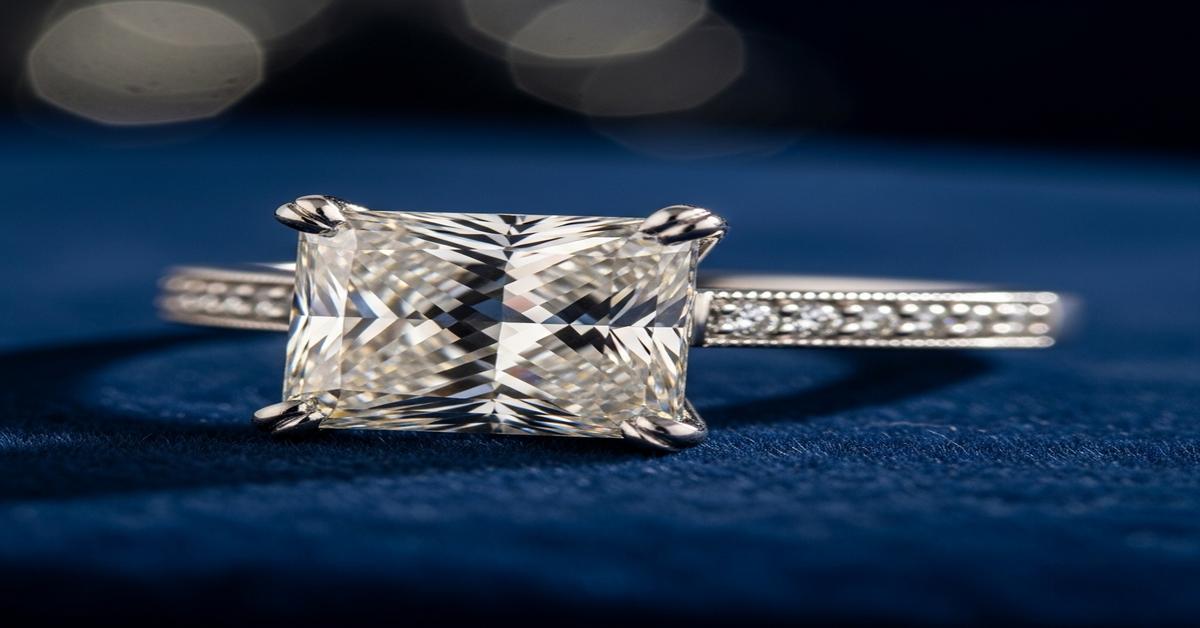
Princess-cut diamonds used to be everywhere. They were the default “champagne and cake” choice in the 1990s and early 2000s because they looked sharp, delivered plenty of brilliance, and cost less per carat than rounds. Then tastes changed. The princess fell out of fashion, and for good reasons: round brilliants dominated light performance charts, mass-produced princess stones developed a reputation for poor cut quality, and trends moved toward softer, vintage shapes. Today the princess is quietly staging a comeback. Better cutting technology, changing style preferences, and the economics of rough diamond yield make the princess a practical and attractive choice again.
Why princess cuts lost favor
1. Round brilliance set a high bar. The round brilliant is optimized to return light to the eye. Its cut standards are well defined, so consumers saw consistent sparkle from round stones. Princess cuts can be brilliant, but their light return varies more. Many buyers equated sparkle with value, so they shifted to rounds.
2. Inconsistent mass-market quality. In the height of the princess trend, many retailers sold stones cut to maximize carat weight rather than optical performance. That produced lower-priced princesses that looked dull or had dark areas. When customers compared those stones to good rounds, the princess often lost. The perception stuck: princess = compromise.
3. Corner vulnerability and setting issues. Princess diamonds terminate in four sharp corners. Poor settings left those corners exposed and prone to chipping. Rings sold with thin prongs or low-quality mounting reinforced a durability concern. Consumers who feared damage migrated to rounded shapes that hide wear better.
4. Shifting fashion toward softer shapes. Cushion, oval, and pear shapes offered a softer look and a romantic silhouette. Those shapes also hid inclusions well and paired easily with halo and vintage-inspired settings that dominated bridal trends.
Why they’re coming back — three concrete reasons
- Better cutting technology means better sparkle.
Cutting centers now use laser mapping, computer modeling, and stricter finishing tolerances. Those tools let cutters control pavilion depth, crown angles, and facet alignment to maximize light return in square outlines. A well-cut princess will show lively brilliance and contrast. Practical example: look for princess proportions with pavilion depth around 65–75% and table roughly 65–75%, paired with excellent symmetry. This combination balances face-up size with light return. Modern cutters also manage facet concision so the stone avoids the “pinched” dark cross sometimes seen in older princesses.
- Economics and the growth of lab-grown diamonds.
Princess cuts retain more rough than rounds. When you cut a square from rough octahedron crystals you can often keep 60–80% of the material, whereas rounds frequently lose more than half. That higher yield translates to lower price per carat, allowing buyers to step up in size without a proportional price jump. This matters more now because lab-grown supply has expanded. Lab-grown princess diamonds often deliver larger face-up millimeter size for the same budget. Example: a 2.0 ct princess might measure 7.0–7.5 mm face-up, whereas a 2.0 ct round is about 8.0–8.2 mm but costs considerably more. For buyers prioritizing size and a crisp, modern look, princesses are efficient.
- Contemporary settings solve old durability and style issues.
Designers have rethought how to set square stones. V-prongs, corner bezels, and hybrid settings protect the vulnerable corners without hiding the shape. Halo settings and tapered baguette side stones emphasize geometry, making the square center feel intentional and modern. Also, buyers are favoring metals that add protection: platinum 950 offers durable prongs and resists wear better than softer 18k gold (75% Au). Even 14k white gold (58.3% Au) is harder and can hold prongs securely if alloyed with appropriate metals. Choosing the right metal and a V-prong or bezel setting reduces chip risk and changes the princess from a risky choice to a durable one.
Practical buying advice
Check proportions and face-up appearance, not just weight. A 1.0 ct princess will usually face up around 5.4–6.0 mm. Two stones with the same carat weight can look different because depth and girdle thickness change face-up millimeters. Insist on actual measurements in millimeters, photos or videos under daylight, and a loupe image from the seller.
Mind clarity and location of inclusions. Princess faceting can hide a few inclusions, but flaws near a corner or on the table will show. For sizes under 1.0 ct, SI1 is often acceptable if the inclusion is not face-up. For stones over 1.5 ct, aim for VS2 or better unless you can inspect the stone in person.
Choose protective settings. Ask for V-prongs or a partial bezel for daily-wear rings. If you want a low profile, a flush setting or bezel is safest. For more sparkle, a halo combined with sturdy prongs balances protection and brilliance.
Prefer trusted reports and return windows. Cut grading for princess cuts is less standardized than for rounds. Ask for grading reports, but also insist on a return period so you can evaluate face-up performance under real conditions.
Princess cuts fell out of favor for clear reasons: inconsistent sparkle, durability concerns, and fashion shifts. Those same issues are being solved now. Better cutting, smarter settings, and economic advantages make the princess a practical and stylish option again. If you want a geometric, modern look with strong value per carat, a well-cut princess in a protective setting is worth a fresh look.