Blog
HPHT vs CVD: Can You Spot the Growth Lines With a Phone Light?

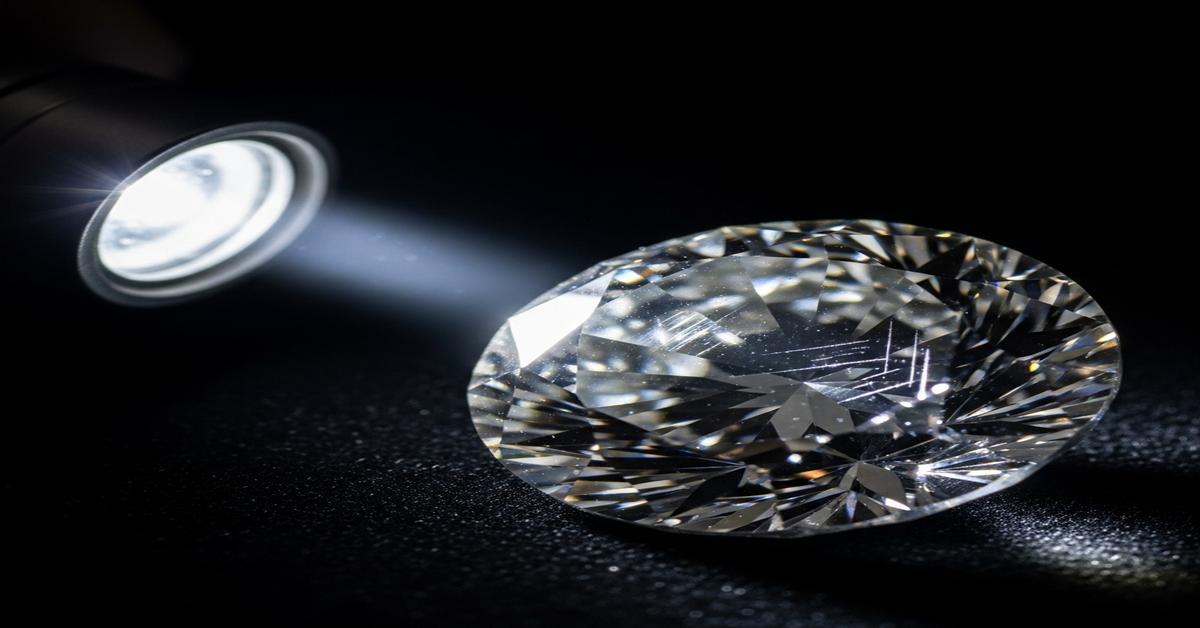
Can you tell an HPHT diamond from a CVD diamond using only your phone light? Short answer: sometimes you can spot clues, but you usually cannot make a reliable ID. Both growth methods leave internal patterns. But those patterns are often subtle, cut-away, or masked by polishing and treatments. A phone flashlight can show hints — if you know what to look for and what the light can’t reveal.
Below I explain what growth lines and other telltale features look like for HPHT and CVD diamonds, why a phone light helps in some cases, and a practical step‑by‑step inspection you can try at home. I’ll also explain the limits so you don’t over‑interpret what you see.
What “growth lines” actually are — and why they differ between HPHT and CVD
Growth lines are internal zoning caused by how carbon was deposited as the crystal formed. They are not surface scratches. The pattern depends on the growth environment.
- HPHT (High Pressure High Temperature) grows in a molten metallic solvent at extreme pressure and temperature. Growth typically follows the crystal’s natural cuboctahedral and octahedral sectors. That produces sectoral zoning, irregular curved or angular growth planes, and often tiny metallic flux inclusions (Fe, Ni, Co) trapped as reflective specks. Why this matters: metallic inclusions and angular zoning are physical signs of HPHT conditions.
- CVD (Chemical Vapor Deposition) grows carbon layer by layer from a gas phase onto a substrate. Layers stack, so CVD diamonds often show very regular, parallel laminar growth lines, called striations, perpendicular to the growth surface. Why this matters: the layered structure is the direct result of vapor deposition, so the lines tend to be straighter and more evenly spaced than HPHT zoning.
What a phone light can reveal — and why it helps
Your phone’s LED is a small, bright, directional light. It is useful because it provides strong, compact illumination you can angle to highlight internal features. Low-angle side lighting accentuates surface and near-surface features. Backlighting (shining through the stone) can reveal internal zoning and layers because differences in refractive index or tiny inclusions scatter light differently.
However, a phone light is limited in three ways:
- No magnification. The naked eye sees only larger features. Most growth lines are sub‑millimeter. A 10x loupe or microscope is often required to see them clearly.
- Specular reflections and camera processing. Phone glass and camera auto‑exposure can wash out subtle internal contrast. A bright reflection from a facet can hide internal lines.
- No spectral or polarization information. Many true diagnostic tests use cross‑polarized light, UV, infrared, or spectroscopy. A phone light gives only white or slightly blue/amber light.
Practical inspection: How to test a diamond with just a phone light
- Clean the diamond first. Oils and dust hide fine details. Use warm soapy water and a soft brush, then dry on a lint‑free cloth.
- Use a dark background. A black cloth or dark table reduces stray reflections and makes subtle contrast easier to see.
- Start with side (sidelighting). Hold the phone light low and to one side of the stone. Rotate the diamond slowly 360°. Look for parallel layers, banding, or abrupt changes in brightness inside the stone.
- Try backlighting. If you can hold the stone so light passes through (table facing the light), look for laminar bands or layered striations. CVD often shows horizontal, evenly spaced striations under transmitted light. HPHT zoning tends to be angular or sectoral and less regular.
- Look for metallic sparkles. Tiny, bright mirror‑like specks or metallic flakes strongly suggest HPHT flux inclusions. They flash like tiny mirrors as you rotate the gem.
- Watch for surface reflections vs internal lines. Gently touch the facets to see if a line is a surface scratch (it moves with the facet). Internal lines stay fixed relative to the crystal’s interior.
- Use a clip‑on macro lens (15–30x) for your phone if you have one. That small, inexpensive tool makes a big difference. You’ll see much smaller striations and inclusions that the bare eye misses.
Typical visual signs to look for
- Signs that point to CVD: regular, parallel laminar lines or banding; horizontal striations that look like stacked plates; very even interior texture. Occasionally you’ll also see “orange peel” type surface texture on growth sectors if the stone is poorly polished.
- Signs that point to HPHT: irregular sectoral zoning, curved or angular growth planes tied to crystal faces, and tiny metallic reflective inclusions (specks or globules). HPHT stones can also show unusual strain patterns under polarized light, but your phone light won’t show polarization.
Common false positives and pitfalls
Don’t mistake other features for growth lines. Natural diamonds can have graining, color zoning, or cleavage planes that look like lines. Surface polish lines, facet junction reflections, or post‑cutting chips can appear as linear features. Also, many lab‑grown diamonds are post‑growth treated (HPHT annealing, irradiation) or are cut from boules to hide growth features. A polished, well‑cut stone often hides the best diagnostic clues.
When a phone light is enough — and when it isn’t
A phone light is good for quick, on‑the‑spot screening. If you see metallic specks or very clear parallel striations, that’s a helpful clue. But the light rarely gives a definitive ID. Professional gem testing uses 10x loupe inspection, a microscope at 30–100x, cross‑polarized light, UV, photoluminescence, and FTIR or Raman spectroscopy to confirm growth type. Labs also supply a certificate naming the growth method.
Practical recommendation
If you’re buying a diamond and want certainty, ask for a laboratory report (GIA, AGS, IGI, etc.). Use your phone light as a first check: clean the stone, use dark background, rotate it, and, if possible, attach a clip‑on macro lens. If you see telltale HPHT flux specks or clean parallel CVD striations, ask the seller for certification. If you don’t see anything, don’t assume the stone is natural—polishing and treatments can hide everything a phone can show.
In short: a phone light can reveal clues but not confirm. Treat what you see as useful hints, then follow up with magnification and a lab report for a reliable identification.