Blog
Why Some GIA “Excellent” Stones Still Look Dull in Your Kitchen

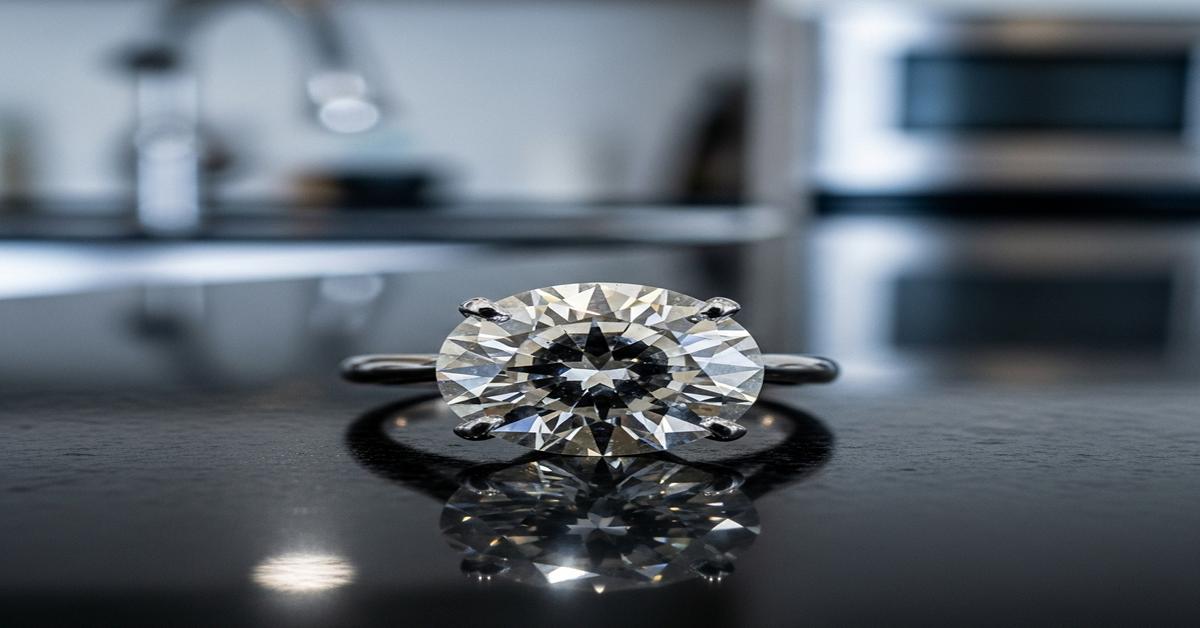
You bought a diamond graded “Excellent” by GIA and expected fireworks. Instead it looks flat under your kitchen light. That happens more often than people think. GIA’s “Excellent” cut grade is a useful indicator, but it doesn’t guarantee the jewel will sparkle the way you expect in normal home lighting. Below I explain the reasons in plain terms, give specific proportion ranges to watch, and list practical checks you can do before you buy.
GIA grading vs. real-world light
GIA grades are made under strict lab conditions. Trained graders examine proportions, polish and symmetry at controlled angles and lighting. The lab uses neutral backgrounds and calibrated lamps. That makes grading consistent. But your kitchen light is usually a single point source (a bulb), or a broad diffuse fixture, and the background, setting and angles are different. A stone can score “Excellent” under lab conditions and still return most light away from your eye in the setting and lighting you use every day. In short: lab scoring is standardized; your home lighting is not.
Common optical reasons a stone looks dull
- Windowing (shallow pavilion or big table). When the pavilion is too shallow or the table is oversized, light goes straight through the diamond rather than reflecting back. The stone shows large pale areas and little contrast. For a 1 ct round (about 6.5 mm), a table of 60–64% and shallow pavilion (<40.6°) will often window. Aim for a table near 53–57% and a pavilion angle around 40.6–41.0° for balanced return.
- Too-deep pavilion. The opposite problem is a very deep pavilion. Light bounces to the side or leaks out the bottom, reducing face-up brightness. Overall depth percentages around 59–62% are generally best for rounds of 1 ct. Depth much above 62% can look dark from above.
- Wrong crown/pavilion angle balance. Crown and pavilion angles work together to return light. A typical “sweet spot” is crown angle 34–35° with pavilion ~40.6–41.0°. If one angle is extreme but the other is not adjusted to match, you lose fire and brilliance. GIA’s “Excellent” allows a wider set of proportions that can include less optimal combinations.
- Large table reduces sparkle. Bigger tables increase perceived size but reduce contrast and scintillation. A big table can make a diamond look flat and less lively, especially in small diamonds under 1 ct where facets become large and fewer.
- Poor light performance factors not captured by grade. GIA’s cut grade considers proportions, symmetry and polish but does not measure directional light performance in the same way as an IdealScope, ASET, or some AGS reports. Two “Excellent” stones can have very different light-return patterns.
- Fluorescence and clarity clouds. Strong blue fluorescence can make a stone look hazy or oily in daylight or under certain LED bulbs. Similarly, clouds or tiny inclusions near the table can scatter light and reduce brightness even if the clarity grade is acceptable at 10x magnification.
- Dirty or badly set stones. Oil, lotions, dust and closed-back or bezel settings block or scatter light. A dirty stone will always look dull. Bezel settings reduce side light entry and can mute sparkle versus a prong setting.
- Lighting type and viewing angle. Point sources (halogen, filament bulbs) cause crisp sparkle. Diffuse overhead lights (many LED panels) produce more wash and less contrast. The same diamond can look dazzling under a point light and bland under diffuse light.
Specific examples to illustrate
- Example A — 1.00 ct round, 6.5 mm, table 62%, depth 58%: big table + shallow pavilion. It may be scored “Excellent” but often shows a pale center (“windowing”) and weak scintillation in a kitchen recessed light.
- Example B — 0.70 ct round, 5.8 mm, table 54%, crown 34.5°, pavilion 40.8°, depth 61%: balanced angles and depth. Likely to look lively across different light sources because it sends more light back to the viewer.
- Example C — 1.20 ct, very strong blue fluorescence: can appear milky or hazy outdoors and under some LEDs, reducing perceived brightness despite a high cut grade.
How to avoid a dull “Excellent” stone
- Ask for light performance images. Request an Ideal-Scope or ASET photo from the seller. These show where light returns and where it leaks. Look for balanced bright areas with some dark contrast zones. Too much all-red or too much white means either all light return (low contrast) or leakage.
- Check proportions, not just the grade. For a 1 ct round, aim for table 53–57%, depth 59–62%, crown 34–35°, pavilion 40.6–41.0°. Small diamonds and fancy shapes need different targets; ask an expert for those.
- Prefer conservative tables on smaller stones. Under 0.5 ct, avoid tables above ~58% because large facets reduce scintillation.
- Avoid very strong fluorescence unless you’ve seen the stone in daylight. If fluorescence is strong to very strong, ask for photos in natural daylight and in indoor lighting before buying.
- Inspect the setting and keep it clean. Prong settings let more light in. Clean the diamond before assessing sparkle. Oils and grit dull the surface quickly.
- Consider an AGS 0 or ASET-backed stone. AGS’s cut system emphasizes light performance and “0” is their ideal. ASET/Ideal-Scope images provide real evidence of how a stone performs visually.
- Trust your eyes with a point light test. Hold the stone under a small bright light and move it. A lively diamond will show quick bright flashes and dark contrast areas. If it looks uniformly pale, it may be windowed or leaking.
Final thoughts
“Excellent” from GIA is a strong starting point but not a guarantee of how a diamond will look across everyday lights. The lab grade tells you the stone meets strict standards for cut proportions, polish and symmetry under controlled conditions. It doesn’t replace a light-performance check for the specific stone and setting. Ask for proportions, ASET/Ideal-Scope images, and real-light photos. Clean the stone and test under a point source. Those steps let you see how a diamond will actually behave in your kitchen light, not just on paper.