Blog
Resale Reality in America: What Happens When You Trade In a Lab-Grown?

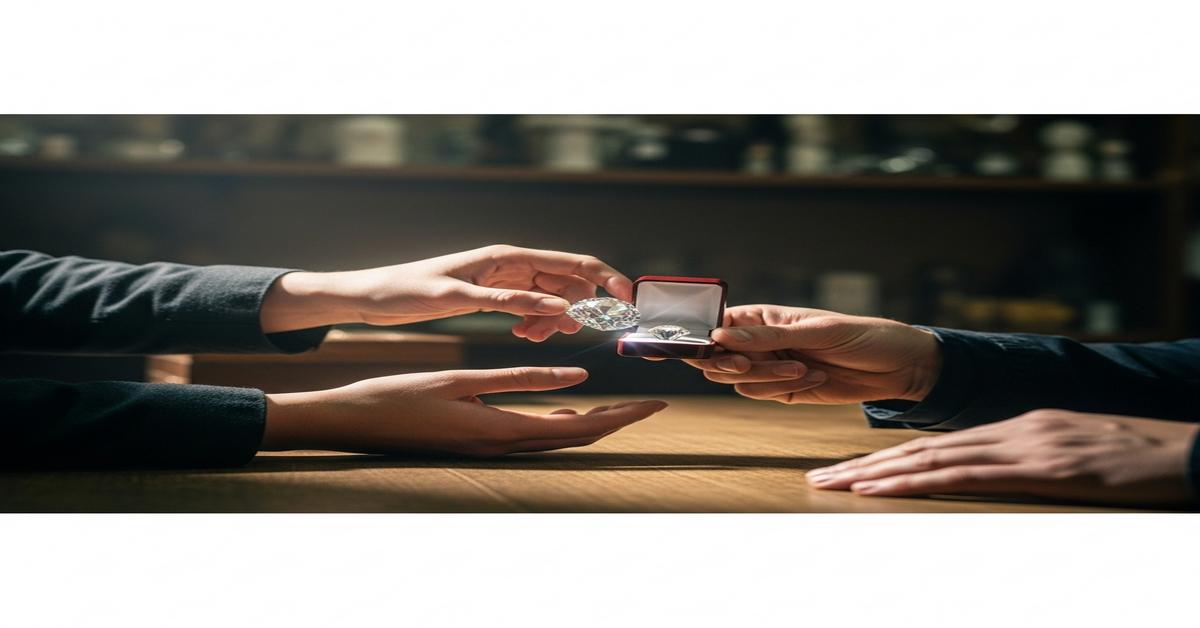
More Americans are buying lab-grown diamonds. They cost less than mined stones and let buyers get larger sizes for the same budget. But when you want to trade one in, the reality is rarely the same as the sticker price. This article explains what actually happens when you trade in a lab-grown diamond in the U.S. — how buyers value them, the routes you can take, typical price ranges, and practical steps to get a fair return.
Why resale values for lab-grown differ from retail prices
Retail prices include manufacturing, branding, store overhead, and retailer margin. Lab-grown diamonds already start lower than mined diamonds at retail. On resale, buyers look at what they can sell the stone for quickly. That is a wholesale or secondhand market price, not the original retail price. For lab-grown specifically, two market forces push resale prices down faster than for naturals:
- Supply pressure. Production of lab-grown diamonds has increased rapidly. More supply lowers secondary-market prices because buyers can source new stones at low cost.
- Buyer perception. Many secondary buyers and end customers still prefer mined stones, so demand for used lab-grown is lower. Less demand lowers prices.
How buyers set trade-in offers
Most buyers use a few core inputs when valuing a trade-in:
- Carat, cut, color, clarity, and measurements. A 1.00 ct round (about 6.4–6.6 mm diameter) of F color, VS2 clarity is easier to sell than an odd shape or lower cut quality.
- Certification and documentation. A grading report that clearly states “lab-grown” from a reputable lab (GIA, IGI, or GCAL) helps. It shortens buyer verification time and can increase the offer.
- Condition and mounting. Scratches, chips, or a poor setting reduce buyer interest. The metal matters too: 14k gold is ~58.3% gold by weight, 18k is 75%, and platinum is typically 95% Pt. Metal can be recycled for intrinsic value.
- Market liquidity. Retailers and wholesalers consider how quickly they can move the stone. Hard-to-sell sizes/qualities get bigger discounts.
Typical trade-in and resale ranges
Exact numbers vary by market and time. These ranges reflect common outcomes in the U.S. as of recent years:
- Retail store trade-in credit: Often 30%–60% of the original retail price. Stores offer credit, not cash, and they factor expected refurbishing and resale margins into the offer.
- Consignment sale (specialist dealer or online): You might receive 40%–70% of retail after the sale, but the process can take weeks or months and fees (10%–30%) apply.
- Cash sale to pawnbroker or local buyer: Typically 10%–35% of retail. These buyers need quick resell opportunities and price conservatively.
Example: a 0.75 ct round, F color, VS2 lab-grown bought retail for $1,500. Typical outcomes might be:
- Store trade-in credit: $450–$900
- Consignment sale after fees: $600–$1,050
- Pawn shop cash: $150–$525
These are examples, not guarantees. Larger, uncommon sizes or unusual clarities can fall outside these ranges.
Trade-in vs. selling for cash — which is better?
If you plan to buy another item from the same retailer, trade-in credit is often higher than a pure cash offer. Retailers use credits to keep the sale in-house and can offer better terms. If you want cash, consignment or selling through a specialized online marketplace often returns more money than a pawnshop, but it takes longer and has fees.
Ways to maximize what you get
- Keep the certificate and original receipt. A lab-grown grading report from a reputable lab reduces buyer uncertainty and speeds up sale. The receipt shows provenance.
- Choose neutral, common cuts and sizes when possible. Round cuts and sizes around 0.75–1.5 ct are more liquid than niche shapes or very small/very large sizes.
- Sell stone and metal separately. If the setting is 14k or 18k gold, get a second opinion on recycling the metal. Sometimes selling the diamond and melting down the setting yields more total cash.
- Shop multiple buyers. Get quotes from the jeweler, a consignment specialist, and at least one cash buyer. Compare net proceeds after fees and taxes.
- Understand the buyback policy. If you bought from a retailer with a written buyback policy, read the terms — time limits, condition requirements, and credit vs. cash options differ.
Practical risks and paperwork
Expect offers in writing for larger sales. Insist on documented grading and condition notes. Be clear about who pays for insurance and shipping if you sell online or consign. For high-value pieces, consider a certified appraisal from an independent appraiser — it won’t raise the market value but helps in negotiating and insurance.
Why lab-grown resale looks worse than mined
Lab-grown diamonds are chemically and physically like mined ones. The price gap is not about quality; it is about market economics and demand. The secondary market treats lab-grown stones more like consumer electronics: rapid price declines as production scales and new supply arrives. Mined diamonds have a more established and deeper secondary market, so they hold resale value better.
Bottom line
Trading in a lab-grown diamond in America usually means accepting a noticeable drop from what you paid. Expect store credits in the 30%–60% range of retail, consignment to get closer to 40%–70% after fees, and cash offers substantially lower. You can improve outcomes by keeping full documentation, choosing liquid sizes and cuts, selling the stone and metal separately when appropriate, and shopping multiple buyers. If resale value is important to you, factor that into the original purchase decision.