Blog
Why Your Eternity Band Can’t Be Resized (and the One Workaround)

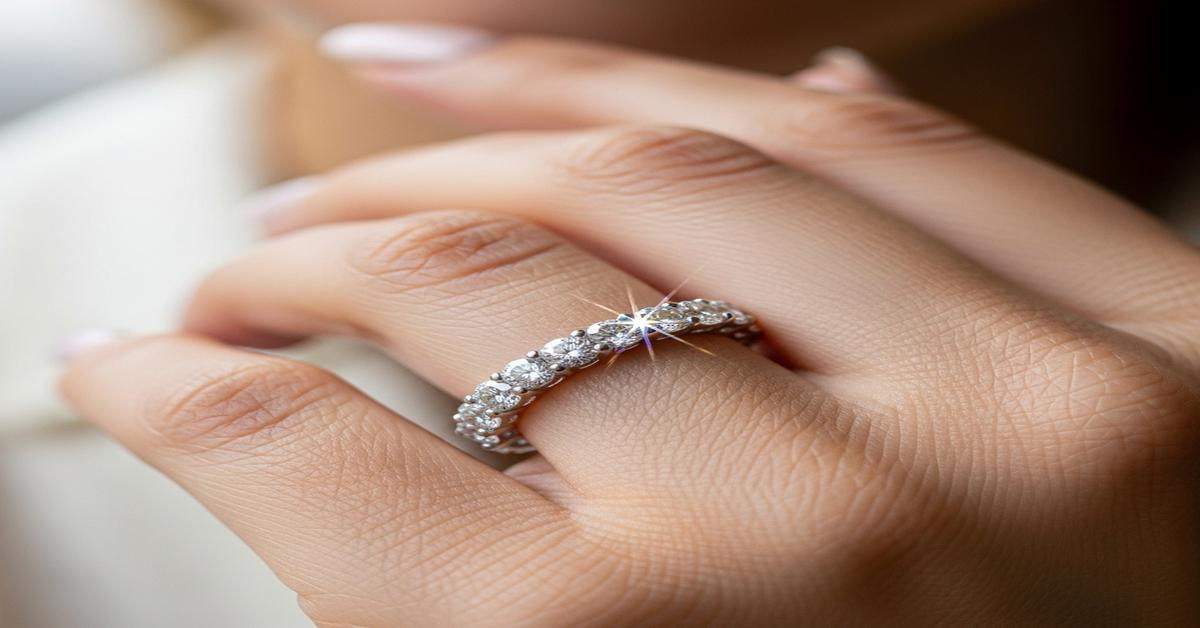
An eternity band is beautiful because the stones run continuously around the ring. That continuous line is also the reason most eternity bands cannot be resized the way a plain band can. This article explains exactly why resizing is usually impossible, what technical risks are involved, and the one reliable workaround that preserves the look and keeps your stones safe.
Why full eternity bands can’t be resized
There are three technical reasons a full (stone-all-around) eternity band resists traditional resizing:
- No plain metal to cut or add to. Traditional resizing works by cutting the shank, removing or adding a small piece of metal, then soldering the gap closed. With stones set 360 degrees, there’s nowhere to cut without disturbing a setting and a stone.
- Setting integrity and pattern continuity. Most eternity bands use tiny prongs, channel walls, or shared-prong settings placed precisely for each stone. Cutting and rejoining risks misaligning those settings, leaving stones loose or showing a visible seam where the pattern no longer matches.
- Heat and gemstone vulnerability. Soldering requires heat. While diamonds tolerate heat well, many colored stones do not. Porous or treated gems (emeralds, opals, turquoise), and stones set with adhesives or low-temperature techniques, can crack, lose color, or lose their polish when heated. Even with diamonds, repeated heating and reworking can weaken prongs and shared settings.
Types of settings make a difference:
- Shared prong and pavé: Stones literally share metal with neighbors. Resizing breaks those shared prongs and jeopardizes multiple stones.
- Channel: Stones sit in a continuous channel wall. A cut in the channel creates a weak point and risks stone drop-out.
- Bezel/flush: Often more robust, but a true 360° bezel still leaves no plain metal for traditional resizing.
Metal matters too. Platinum is tougher to work but requires higher heat and special solders; 18k gold is softer and more malleable than 14k but is also more expensive to repair. Matching alloy composition is crucial to avoid color mismatch or a weak joint.
The one reliable workaround: convert to a half‑ or three‑quarter eternity
The practical, reliable fix is to convert the ring from a full eternity into a half‑eternity or three‑quarter eternity. In plain terms, the jeweler removes a number of stones from the underside and creates a plain metal section (a sizing area) that lets them resize, repair, or add comfort-fit shaping.
Why this works: removing stones creates the plain metal you need to cut, add, or remove material and solder without touching stones. It preserves the continuous look on the front-facing portion of the band while giving you the structural freedom you need.
How the conversion is done (typical steps)
- Stone mapping and removal: The jeweler photographs and documents the stone positions, then carefully removes a set number of stones from the back—often 4–8 stones depending on stone size and the amount of sizing needed. For example, a ring with 2.5 mm rounds (~0.07–0.08 ct each) might lose three to five stones to gain about one full size.
- Fabricate a plain shank section: A new section of matching alloy (14k or 18k gold, or platinum) is soldered or laser-welded under the removed area. If your ring is rose gold (usually 14k rose = ~58% Au + copper), the jeweler should match alloy and color or replate afterward to hide seams.
- Resizing and finishing: The jeweler resizes using the new plain section, finishes the join, retips adjacent prongs, repolishes, and rechecks all remaining stones for tightness.
- Optional work: If you want to preserve the exact stone count and profile, the jeweler can reset the removed stones into new positions or store them for future restoration.
Pros, cons, and costs
- Pros: Permanent, safe for the remaining stones, allows significant size changes, keeps the visible “eternity” look on the front. Works for all metals, including platinum.
- Cons: You lose the literal 360° of stones. The removed stones may need to be stored or reset elsewhere. A perfect match of metal color and finish is important to hide the conversion area. The cost can approach that of a new band depending on labor and alloy.
- Typical cost range: Highly variable. Simple removal and shank fabrication might run $150–$500 at a local bench jeweler. Complex platinum work or high-end pavé rework can be $500–$1,500. If the jeweler rebuilds the band and resets all stones, costs can be higher—often comparable to commissioning a new ring.
When small adjustments are possible without conversion
If the change needed is tiny (about a quarter to half a US ring size), sometimes a jeweler can add a sizing bead or fit a thin ring guard or sleeve. Those options are non-invasive and reversible, but they are not resizing. They are best for temporary changes, such as seasonal swelling or minor weight changes. They won’t fix a ring that’s a full size or more off.
Practical tips when you take your ring to a jeweler
- Choose a jeweler who specializes in pavé and eternity work. Ask for examples and references.
- Request documentation: photographs, exact stone count, and a written description of what will be done with any removed stones.
- Ask about alloy matching (14k vs 18k, rose vs yellow tint) and whether re‑plating will be done to hide join marks.
- If stones are valuable or sentimental, ask whether they will be kept on file and insured during the work.
In short: a true 360° eternity band can’t be resized by the usual cut-and-solder method because there’s no plain metal to work on and because altering the setting risks stones and pattern alignment. The one dependable workaround is converting the ring to a half‑ or three‑quarter eternity by removing stones from the back and adding a plain section. It’s a trade-off — you lose a few stones on the underside but gain a safe, durable solution that lets the ring be sized, repaired, and enjoyed for years.