Blog
Ring Sizers Lie: The One Method That Nails Fit in Humid US Summers

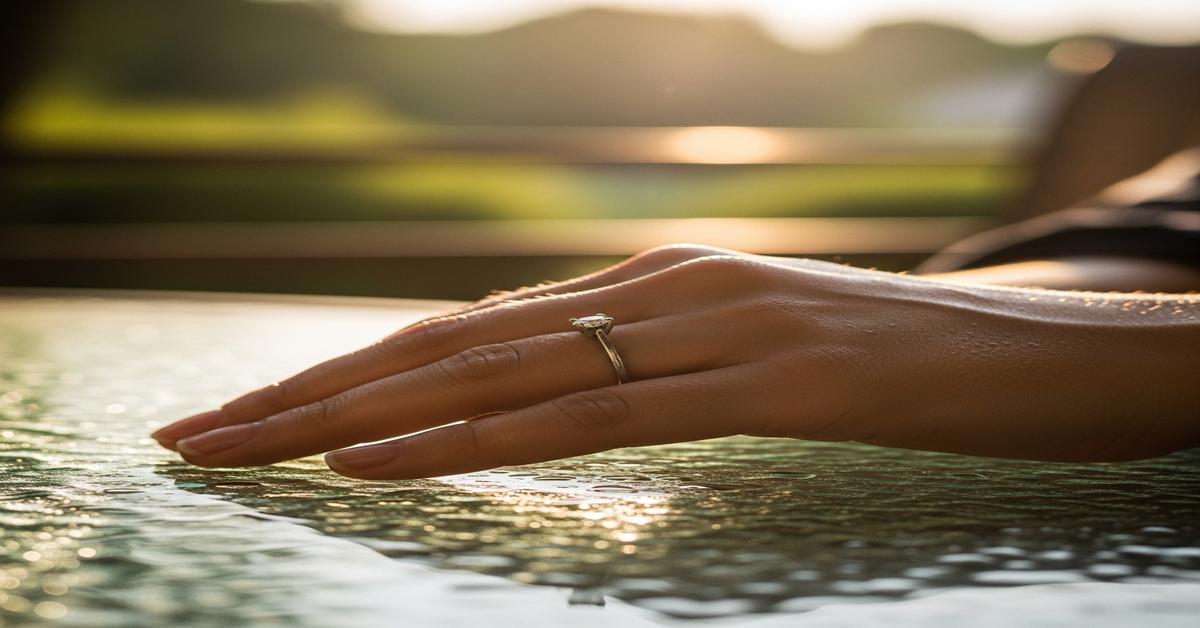
Most ring sizers — the cheap plastic rings, cloth tapes, or phone apps — give different answers depending on the weather. In the humid, hot summers of many US regions your fingers can swell half a size or more. That makes a ring ordered from an unreliable measurement either too tight (won’t get over the knuckle) or too loose (spins, slides off). Below I explain why common methods lie and give the single, repeatable method that will get you the right fit in humid summer conditions.
Why common ring-sizers fail in humid summers
Three physical things change your finger size in humidity and heat:
- Skin hydration and tissue swelling. High relative humidity (and heat) makes the outer skin absorb moisture and internal tissue retain fluid. That can add a few tenths of a millimeter in diameter — roughly 0.25–1.0 US sizes worth of circumference depending on person.
- Blood flow and vasodilation. Heat increases blood flow to extremities. More blood in the finger tissue makes it feel and measure larger than when cool.
- Measurement tool error. Plastic sizers stretch with use and humidity. Paper or string can expand or compress. Phone apps assume consistent temperature and pressure when you don’t have it.
Because of that, a measurement taken indoors, early morning, or with a stretchy tool is not a reliable predictor of how a ring will fit on a humid summer afternoon.
The one method that nails the fit in humid US summers
Use a calibrated metal ring gauge (stainless-steel sizing ring set or mandrel) and measure your finger after you’ve acclimated to the same heat and humidity you’ll be wearing the ring in. Do it this way to remove the biggest variables.
- Get the right tool. Borrow or buy a stainless-steel ring-sizer set or a jeweler’s ring gauge. Metal does not stretch or absorb moisture and is calibrated in standard US sizes and half sizes.
- Match conditions. Spend 10–15 minutes outside or in the room that matches the typical environment where you’ll wear the ring. If you’ll wear it in 85°F/70% humidity, measure yourself after being in similar conditions — skin must reach the same thermal and moisture state.
- Test knuckle and base. Slide the metal sizing rings over your finger until one passes the knuckle with gentle resistance and sits comfortably at the base. The right ring will pass the knuckle with a little friction and then feel snug (not tight) at the base as you rotate it. If your knuckle is larger than the base, choose the size that fits the knuckle and have jeweler thin or taper the band if needed.
- Record circumference in mm. If your gauge shows diameter or circumference, write that down. One full US size ≈ 0.8128 mm diameter change, which is about 2.55 mm circumference change. That helps for conversions later and for communicating with a jeweler.
- Repeat at different times of day. Measure mid-afternoon and after a cooler morning. If the humid measurement is consistently larger by more than a half size and the ring will be worn outdoors in summer, use the humid reading.
This method works because the metal gauge removes tool error and the acclimation step puts your skin into the same physical state it will be in when you wear the ring. That eliminates the biggest surprise: your finger changing size after the ring arrives.
How band width and style change the final size
Band width matters. A wider band presses against more skin and feels tighter. Adjust from the metal-gauge size as follows (practical guideline):
- 2–4 mm band: use the measured size.
- 5–7 mm band: add 0.25–0.5 US sizes (≈0.2–1.3 mm circumference).
- 8–10 mm band: add 0.5–1.0 US sizes (≈1.3–2.6 mm circumference).
- Comfort-fit interior: comfort-fit rings feel looser; subtract about 0.25 size if you measured for a flat interior band.
Also consider any top-heavy ring (large stones) that may cause rotation; a slightly tighter fit helps prevent spinning.
Examples and conversions — how to think about numbers
- If your humid measurement on a metal gauge is US 6.5, that corresponds to about 52.5 mm circumference. If you choose an 8 mm wide band, buy or request a 7.0 (half to full size larger) or ask your jeweler to size accordingly.
- If your knuckle is larger than your base and the metal gauge that clears the knuckle gives US 7 but the base feels loose, choose US 7 and have the jeweler add a comfort-fit/inner taper or sizing beads to reduce rotation.
Practical tips, pitfalls, and when to see a jeweler
- Do not rely on string or cloth alone. Those materials stretch or absorb moisture and will under- or overestimate size in humidity.
- Carry a metal gauge when shopping or ask the retailer to do an outdoor-equivalent measurement. Reputable jewelers have calibrated sets and will test fit on-site after warming your hands.
- Allow for life changes. If you’re pregnant, losing weight, or starting a sodium-heavy diet, expect size changes and measure again before ordering a permanent ring.
- Resizing limits. Plain gold or platinum rings can usually be resized up or down 1–2 sizes. Rings with pave-set stones, tension settings, or complex designs are harder to resize — get the fit right from the start.
- Order half sizes when possible. Quarter sizes exist but aren’t always available. When in doubt, choose the size that’s comfortable in humid conditions; a ring that’s slightly loose is safer than one that can’t be removed.
In short: the single method that consistently nails the fit in humid US summers is a metal ring gauge used after you’ve acclimated your hands to summer heat and humidity, with adjustments for band width and knuckle shape. That removes tool error and matches the real conditions your skin will be in when you wear the piece.