Blog
Stacking Without Spin: The Thin Spacer Hack Stylists Use

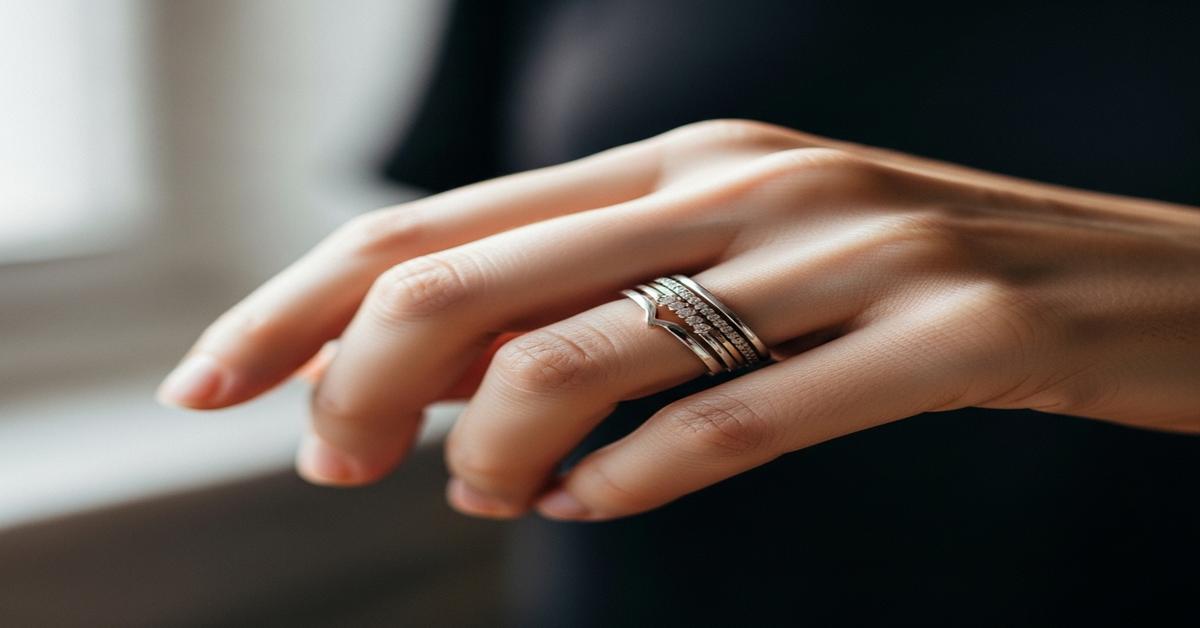
Ring stacks look best when each piece sits where it was meant to. But stones that flip, bands that drift, and uneven spacing ruin the effect. Stylists rely on a simple trick: thin spacer bands or beads placed between rings or links. These thin pieces add contact, shift pressure points, and stop rotation without changing the look. Below I explain the mechanics, the materials, how to use them, and real-world examples you can try today.
How thin spacers stop spin — the mechanics
Spin happens because the center of gravity of a ring system moves or because there is too little friction between pieces. A thin spacer does two things:
- Increases contact area. A 0.8–1.5 mm spacer adds surface that presses against adjacent bands. More surface equals more friction, which resists rotation.
- Shifts pressure points. Placing a spacer next to the center stone moves the pivot point outward. The stack balances differently, so the stone faces up instead of turning.
Think of it like a shim in carpentry. The addition is small, but it changes how parts interact.
Which spacers to use — materials and profiles
Pick a spacer that suits the piece and the wearer’s lifestyle. Here are common options and why you’d choose each.
- Thin metal bands (0.8–1.5 mm). Narrow solid gold or platinum bands are the most elegant. Use 14k gold (58.3% gold) for daily wear because it’s harder and more scratch-resistant than 18k (75% gold), which is softer and better for occasional wear or high-polish styles.
- Half-round or flat-profile spacers. Half-round increases contact with the finger and adjacent rings. Flat profiles can lock a faceted edge in place. For preventing spin, half-round at 1.0–1.2 mm often works best.
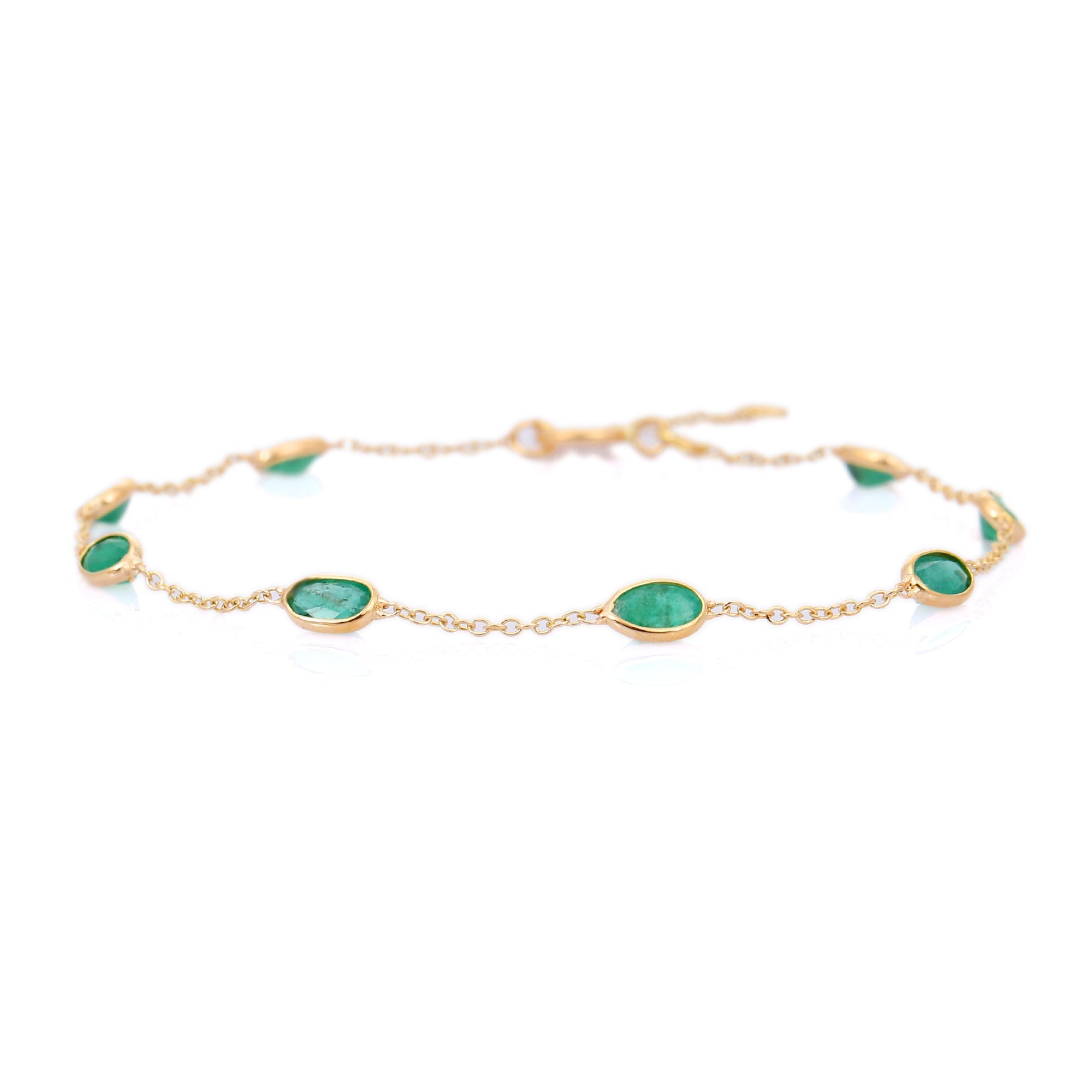
- Micro bead spacers (1.5–3 mm). Often used on bracelets and necklaces, small textured beads create friction and separate charms. Use sterling silver or gold-filled for affordability; choose solid gold for matching fine jewelry and to avoid mixing alloys.
- Silicone or polymer ring guards (0.5–1 mm). Cheap and removable. Good for temporary fixes or rental rings. They add grip but are visible on close inspection, so use under heavier bands or when color match isn’t critical.
Practical placement rules
Where you put the spacer matters. Follow these practical rules:
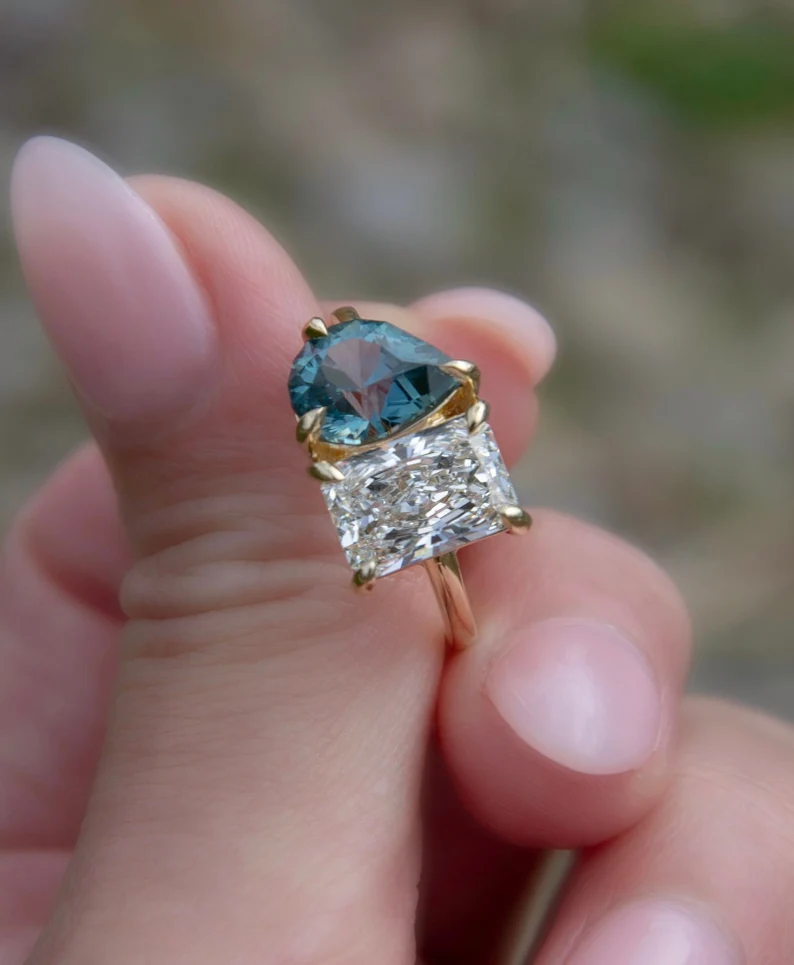
- Next to the focal ring. Place the spacer on one or both sides of the ring that flips most, usually the engagement ring. A 1 mm gold spacer on each side stabilizes an east-west oval or marquise stone.
- Between wide and narrow bands. A narrow spacer between a wide band (3–5 mm) and a thin band (1–1.5 mm) evens the pressure. This prevents the narrow band from sliding under the wide one.
- Match profile to profile. If the main ring has a knife-edge or chevron, use a flat spacer to create a seat. If it’s rounded, use a half-round spacer for full contact.
- Keep symmetry for aesthetics. Even when you only need one spacer for function, consider balancing the look with a matching spacer on the opposite side.
DIY fixes vs. permanent solutions
Decide if you want a removable fix or a long-term solution.
- Removable options: Silicone guards, tension rings, or slipped-on micro bands. These are inexpensive and reversible. Great for rentals, seasonal wear, or when you’re unsure about sizing.
- Permanent options: Soldered micro spacers or custom half-bezel spacer pieces. These require a jeweler. They look seamless and stay put, making them ideal for engagement ring settings that must always sit correctly.
If the underlying problem is an ill-fitting ring, sizing is the better long-term fix. Spacers compensate for fit; they don’t replace a correct circumference.
Examples stylists use
- East-west oval engagement ring. Problem: ring rotates. Solution: two 1.0 mm half-round 14k gold spacers, one on each side. Why it works: they widen the stack where the oval sits, shifting the pivot and increasing friction.
- Thin wedding band beside a 1.5 ct solitaire. Problem: thin band slides under solitaire. Solution: 0.8 mm flat spacer directly between the bands. Why: it creates a ledge that keeps the thin band from dipping beneath.
- Charm bracelet with rotating charms. Problem: charms spin and tangle. Solution: 2 mm textured spacer beads placed between charm links. Why: beads create micro-stops that reduce free play and keep charms aligned.
Care, compatibility, and cautions
Spacers are simple, but they interact with metal and wear. Keep these points in mind:
- Avoid mixing reactive metals in close contact. Gold and sterling silver wear differently; they can create visible contrast and, rarely, galvanic corrosion in humid conditions. If you want mixed metal looks, use plated or gold-filled beads as buffers or choose metals with similar hardness.
- Choose an alloy for wear. For everyday pieces, 14k gold or platinum are the safest. 18k gold looks richer but dents faster. For micro spacers that touch the finger, comfort is key—choose a smooth finish.
- Check annually. Have soldered spacers and prongs checked every 12–18 months. The added pressure point can accelerate wear on thin shanks.
- Don’t use spacers as the only size correction. If a ring freely rotates because it’s two sizes too big, size it properly. Spacers are best for minor balance and alignment problems.
How to choose the right spacer — quick checklist
- Measure the problem: is the ring rotating or is it physically slipping? Rotation needs friction; slipping needs sizing.
- Pick thickness: 0.8–1.5 mm for rings; 1.5–3 mm for bracelets and necklaces.
- Pick profile: half-round for rounded stacks, flat for knife-edges and seats.
- Choose alloy: 14k gold or platinum for daily wear; sterling or gold-filled for lower cost options on bracelets.
- Decide permanence: removable silicone or metal for testing; soldered spacer for a seamless, long-term fix.
Thin spacers are a low-cost, low-impact way to make jewelry stacks behave. They solve the common problems of rotation and drift by changing contact, balance, and pressure points. Use the right thickness, profile, and metal, and you’ll keep stones facing up and stacks looking intentional.