Blog
Arizona Peridot, Maine Tourmaline, Montana Sapphire: Does “Made in USA” Matter?

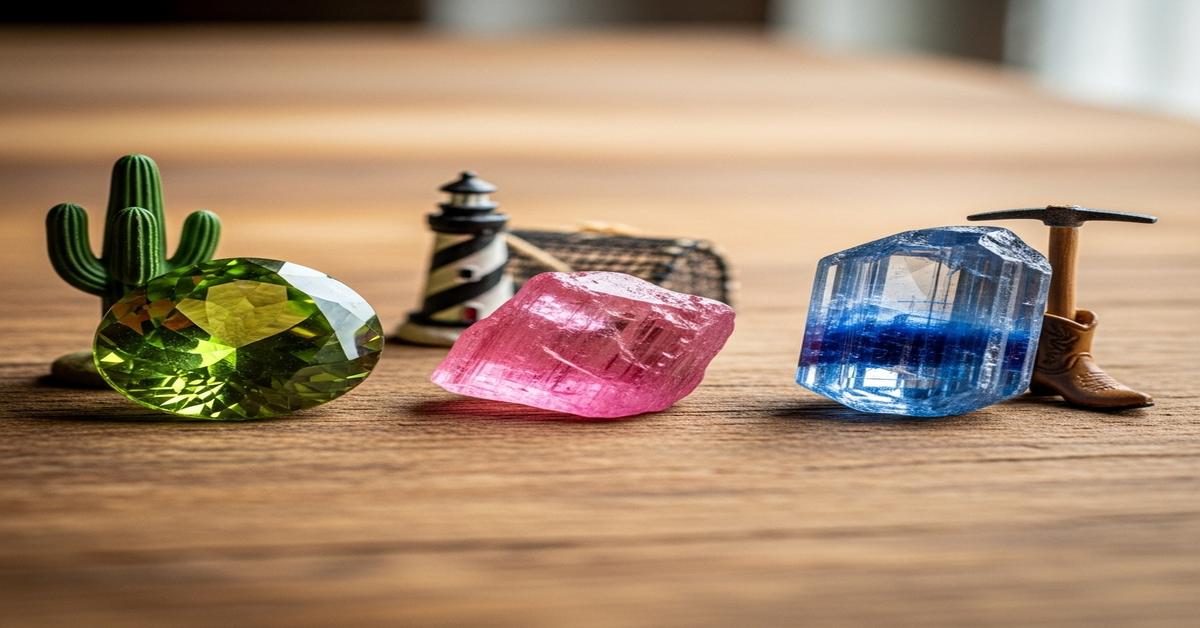
Gemstones from the United States — Arizona peridot, Maine tourmaline, Montana sapphire — carry a clear story: they were found in American soil. That story can mean different things to different buyers. For some, it signals higher environmental and labor standards. For others, it signals rarity and collector value. But labels like “Made in USA” are not as straightforward as they look. Below I explain what those labels can actually mean, why origin matters (or doesn’t), and how to evaluate stones and finished jewelry so you know what you are really buying.
What “Made in USA” usually refers to
“Made in USA” is a legal and commercial claim. For jewelry it most often applies to the finished piece — the setting, soldering, polishing, and final assembly. Under standard consumer-product rules, a product labeled “Made in USA” must be “all or virtually all” made in the United States. That rarely happens if any component (metal, stones, findings) was manufactured or sourced overseas.
For gemstones, three separate origins exist:
- Mining origin: where the rough stone was extracted (Arizona, Maine, Montana).
- Cutting origin: where the rough was cut and polished (India, Thailand, United States).
- Manufacturing origin: where the stone was set and the finished jewelry assembled.
So a ring can be advertised as “Made in USA” because it was set and assembled in the U.S., even if the stone was cut or treated overseas. Likewise, a stone can be mined in the U.S. but cut elsewhere and still be described as “American gem.”
Why mining origin matters: taste, rarity, and resale
Origin affects aesthetics, rarity, and market value. Take Montana sapphires. The Yogo Gulch sapphires from the Judith Mountains are famous for their compact, cornflower-blue color, strong saturation, and exceptional clarity. They often require little or no heat treatment. Those traits create a premium for collectors. Other Montana deposits (Rock Creek, Dry Cottonwood) yield a wider color range — pinks, parti-colors, teal — and usually are lower priced than top-quality Yogo material.
Arizona peridot (notably from the San Carlos Apache Reservation) is known for a bright olive to lime-green. Peridot is magnesium iron silicate (forsterite with some fayalite). That chemistry gives it a greener tone than many other green gems. San Carlos material is abundant enough to supply the market, but large clean sizes (5–10+ ct) are sought by collectors and can command higher per-carat prices.
Maine tourmaline comes from local pegmatites and yields a broad palette — watermelon (pink center, green rim), deep rubellite, and greens. Maine stones have historical appeal in American jewelry and attract buyers who prefer provenance. Small, high-quality slices of pink tourmaline (1–3 ct, well saturated) from Maine often capture collector premiums when provenanced.
Why cutting and treatment matter
Origin alone doesn’t tell the whole story. Treatments change appearance and value. Montana sapphires are commonly heat-treated to improve color, but Yogo pieces are famous for being untreated. Heat treatment is an accepted enhancement in sapphire markets, but untreated material typically sells for more because it’s rarer. Some sapphires from other countries get diffusion or lead-glass filling — treatments that significantly alter value and require clear disclosure.
Peridot is usually untreated. Tourmaline is also rarely treated for color. However, cutting quality makes a big visual difference. A 1.0 ct tourmaline cut to ideal proportions will display color and brilliance better than a poorly cut 2.0 ct. If you care about brightness and sparkle, ask where the stone was cut, and for photos of the finished stone face-up and in strong light.
Traceability and lab reports — what they can and cannot say
Gem labs can authenticate species (sapphire, tourmaline, peridot), confirm treatments, and sometimes offer an origin opinion. Techniques include inclusion study, trace-element analysis (LA‑ICP‑MS), and isotopic work. But origin determinations are probabilistic. For example, Yogo sapphires have distinctive inclusion patterns and trace-element profiles that labs can often identify with confidence. For Maine tourmaline and many peridots, trace element ranges overlap with stones from other countries, so labs may be reluctant to provide a definitive origin unless the sample is strongly diagnostic.
Always ask for clear documentation: lab reports that list treatments, a seller-origin statement, and, when possible, chain-of-custody information that ties the rough to the finished stone. If provenance is central to your purchase, insist on a report from a recognized lab and written seller guarantees.
Environmental and ethical implications
Mining in the U.S. must comply with state and federal environmental laws, permitting, and reclamation rules. That generally means higher operational costs and stricter oversight than in some other countries. This can translate into higher prices, but also to more predictable environmental and labor practices. That said, mines on private or tribal land follow different governance. San Carlos peridot mining is controlled by the San Carlos Apache Tribe; proceeds and management are under tribal jurisdiction. That can be an ethical plus for buyers who want to support tribal economies. Always ask about royalties, community benefits, and reclamation practices if sustainability matters to you.
Practical buying checklist
- Ask what “Made in USA” means: final assembly only, stone mined here, or both?
- Request lab reports: species, carat weight, measurements (mm), treatments disclosed, and any origin statement.
- Know typical specs: peridot from Arizona often 1–10 ct; fine Yogo sapphires are rare and usually under 3 ct for top color; Maine tourmaline gems commonly 0.5–5 ct but fine pockets yield larger pieces.
- Ask about cutting location: where was the rough polished? That affects cut quality and often resale.
- Check metal work: if you want a true “Made in USA” piece, confirm the alloy and assembly — e.g., 14k gold (58.3% Au) fabricated and set in the U.S.
- Get a written provenance: photos of rough, invoices, and seller statements add confidence for collectors.
Bottom line
“Made in USA” can matter, but it depends on what you value. If you want to support local manufacturing or tribal mining, ask precise questions and seek documentation. If you value specific gem characteristics — untreated Yogo sapphires, bright San Carlos peridot, or historic Maine tourmaline — origin and treatment disclosures directly affect beauty and price. Origin is a useful signal, not a guarantee. The smart buyer combines provenance, lab reports, clear treatment disclosure, and seller transparency before making a purchase.