Blog
Feather vs Crystal: Which Inclusion Scares US Appraisers More?

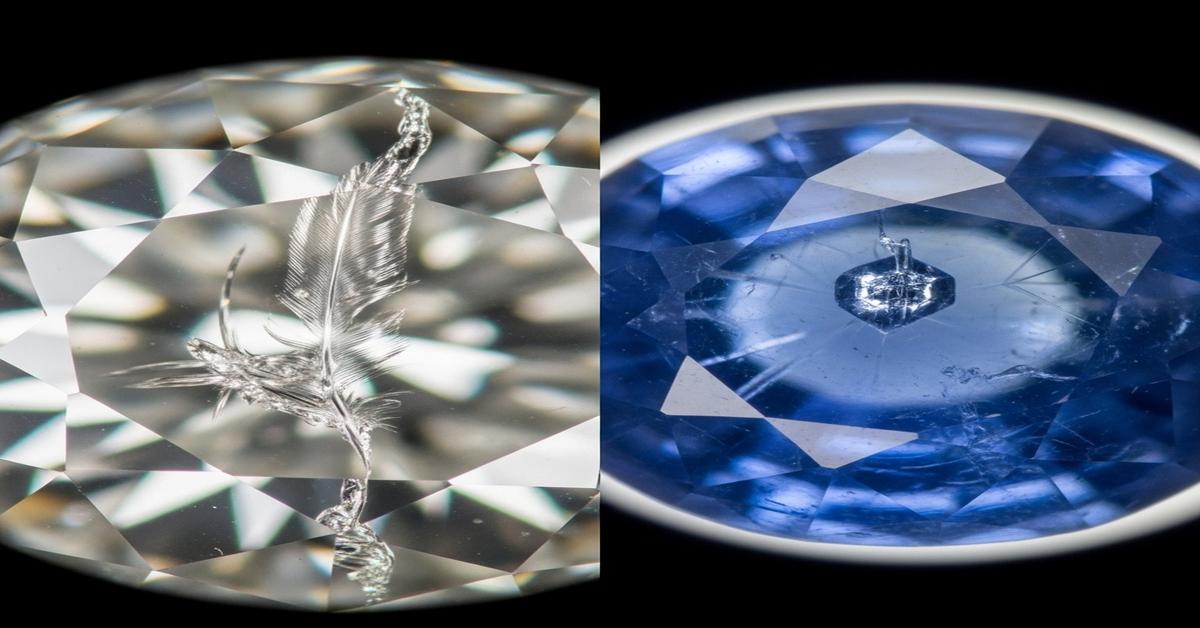
Intro: When appraisers in the U.S. look at a gemstone under 10x loupe, two things make them sit up: a feather (an internal fracture) and a crystal (a solid foreign or mineral inclusion). Both change value, but for different reasons. This article explains what each is, why appraisers worry, and which actually causes more professional concern. I’ll use specific examples and practical advice so you can understand how an inclusion affects price, care, and insurability.
What is a feather? A feather is a fracture or cleavage inside a gemstone. It looks like a small white or translucent crack, sometimes branching like a plume. Feathers can be tiny (0.2–0.5 mm) or large (2–4 mm). The scary ones are surface-reaching feathers — those that meet the girdle or pavilion. A 1.00 ct round brilliant diamond with a 2 mm feather touching the girdle is an example of a high-risk feather. In colored stones, feathers in emeralds or sapphires often run to the surface and weaken structure.
What is a crystal inclusion? A crystal inclusion is a solid particle trapped inside the host gem. In diamonds, this is often another diamond or a carbon crystal. In sapphires and rubies it may be rutile needles or zircon. Crystals vary in size from pinpoint (less than 0.1 mm) to several millimeters. A 0.8 mm black crystal near the table will be visible and may affect appearance, but it does not automatically mean the stone will break.
Why appraisers worry — the practical reasons Appraisers evaluate three things: market value, durability/risk, and disclosure for insurance and sale. Each inclusion affects these differently.
- Durability risk: Feathers are fractures. They can propagate under pressure or heat and cause splitting. A surface-reaching feather makes the stone structurally weaker. Crystals are solid; they don’t spread like a crack.
- Repair and setting risk: Jewelers apply force, heat, or ultrasonic cleaning. Soldering and prong tightening can widen a feather. Fracture-filled stones (glass or resin filled into feathers) are especially vulnerable to heat. For example, routine soldering at 600–800°C or an ultrasonic bath can damage fillers and the host stone. Appraisers must warn clients about repair risks — a liability issue.
- Value and disclosure: Feathers that threaten durability cause larger downward adjustments in replacement value because buyers would pay a lot less for a risky stone. Crystals often affect the beauty and clarity grade but may not force a big discount if they’re small or hidden by the setting.
- Treatment detection: Crystals can be diagnostic for origin or indicate heat treatment. Feathers can be filled — a targeted red flag because filled fractures require disclosure and change insurability and marketability drastically.
Concrete examples
- Diamond: A 1.00 ct round, face-up eye-clean VS2 becomes problematic when a 2 mm feather meets the girdle. The feather can reduce the stone’s practical clarity to I1 and drop market price by 30–60% depending on location and visibility. Appraisers will add a condition note and might list replacement cost at market discount.
- Emerald: A 2.50 ct emerald with multiple 1–3 mm surface-reaching feathers is common. But because emeralds are expected to be included, appraisers focus on oil or resin treatment. If fillers are present, the stone’s repair and care become a concern. Breakage risk is high and insurance replacement value can be cut by 50–80% if structural integrity is compromised.
- Ruby with a crystal: A 1.20 ct ruby with a 0.6 mm rutile crystal under the table affects color and brilliance but poses little fracture risk. The clarity issue may reduce price 10–25%, not the steep hit that a surface-reaching feather would bring.
Which scares appraisers more? Generally, feathers scare appraisers more. Here’s why:
- Immediate durability concern: A feather can become a broken gem. That is a clear, testable harm that leads to disputes and insurance claims. Appraisers must record condition and give practical care advice to avoid liability.
- Repair and maintenance liability: If an appraiser fails to note a risky feather and the stone breaks during resizing, the owner may allege negligence. Appraisers follow USPAP-like standards and state rules that require disclosure of condition. A feather creates a condition note; a stable internal crystal often does not.
- Treatment interaction: Feathers are commonly treated (filled). Fracture-filled stones are volatile in repair situations. Appraisers treat filled stones nearly like a different commodity — lower value, different insurability, and a required disclosure.
When crystals can be the bigger problem Crystals matter when they’re large, located under the table, or indicate treatment or synthetic origin. Examples:
- A large black crystal in a 2.00 ct diamond that masks light return can ruin face-up brilliance and drop price sharply.
- In rubies, certain crystal patterns can reveal that the stone is glass-filled or flux-healed after high-temperature treatment. These require disclosure and often a steep price cut.
- Some crystal inclusions are diagnostic and can change origin attributions — which affects value (Sri Lanka vs. Burma rubies, for example).
Practical steps buyers and owners should take
- Ask for a lab report for stones over 0.50 ct (GIA, AGS, or equivalent). The clarity plot will show feathers and crystals and indicate surface-reaching inclusions.
- Ask your appraiser for a condition note. If a feather reaches the surface or a stone is fracture-filled, the appraiser should list repair risks and recommended settings.
- For stones with surface-reaching feathers choose protective settings: bezel, low-profile halo, or flush setting. Avoid high-stress prong work near the inclusion.
- If a stone is fracture-filled, avoid high-heat repairs. Tell any jeweler about the treatment; show the appraiser’s note. Soldering in 14K gold (~58.3% Au) or 18K gold (~75% Au) and platinum repairs have different heat profiles that can damage fillers.
- For insurance, expect lower replacement values on stones with durability concerns. Maintain photos and the appraisal with inclusion notes.
Bottom line: Both feathers and crystals matter. Crystals mainly affect appearance and identification. Feathers affect structure and future risk. Because appraisers must protect clients, document condition, and avoid liability, a surface-reaching or large feather typically causes more alarm than a small crystal. If you own or buy a stone with either, get a clear lab report and a condition note. That reduces surprises and protects resale and insurance value.