Blog
P.O. Boxes and Fine Jewelry: What US Carriers Allow (and Don’t)

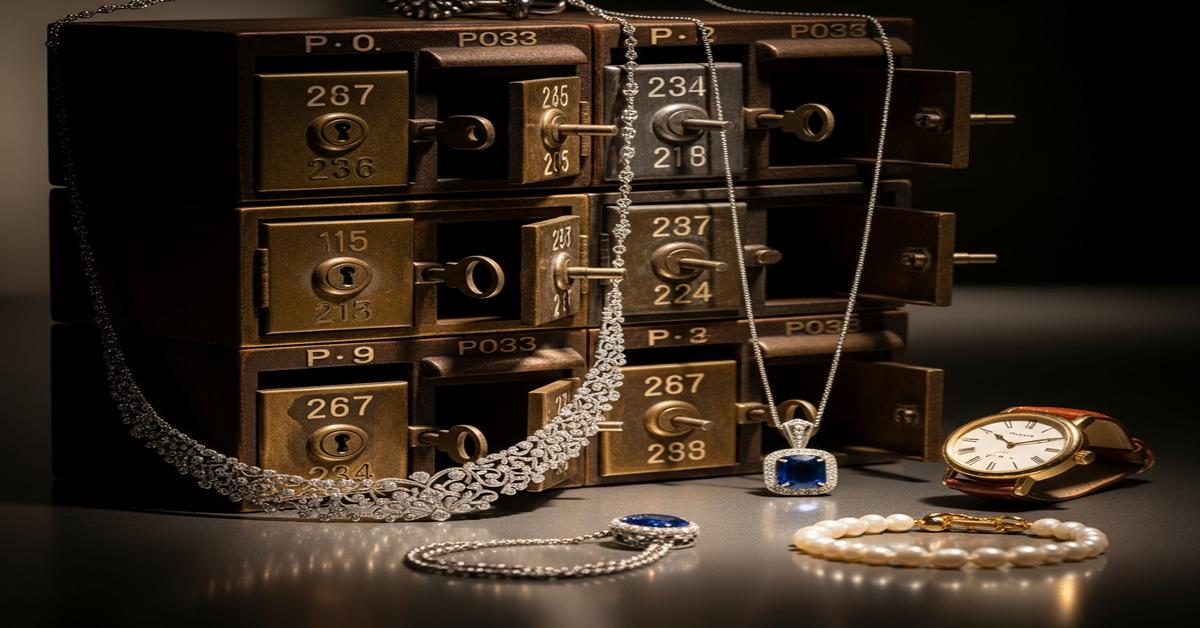
Buying, selling, or shipping fine jewelry through a P.O. Box raises practical and insurance issues that many people don’t expect. This article explains which U.S. carriers will deliver to P.O. Boxes, what limits and risks those deliveries create for valuable items (think diamonds, gold, platinum), and practical workarounds sellers and buyers should use to protect pieces and claims.
Which carriers deliver to P.O. Boxes?
USPS is the only major domestic carrier that routinely delivers to United States Postal Service P.O. Boxes. First-Class, Priority Mail, Priority Mail Express, and Retail Ground can be placed into a P.O. Box. USPS will also receive registered items at the post office for handling.
UPS, FedEx, DHL and most private couriers do not deliver to P.O. Boxes. They require a street address or a commercial mailbox at a CMRA (Commercial Mail Receiving Agency, e.g., The UPS Store). If a merchant attempts to ship jewelry via UPS or FedEx to a P.O. Box, the label will be rejected or the package returned to sender.
Why P.O. Boxes are a poor choice for fine jewelry
- No delivery signature at the box: Postal carriers can’t obtain a delivery signature inside a locked box. If you request a signature for a piece of jewelry, USPS will typically hold the item at the counter for pickup rather than leave it in the box. That defeats the convenience of P.O. Boxes and complicates claims.
- Insurance and proofs of delivery: Insurance claims often require a clear chain of custody and proof of who accepted the package. Deliveries to a P.O. Box lack that individual acceptance record. Many insurers and retailers will either deny claims or limit payouts if a signature or person-to-person delivery was required but not possible.
- Restricted delivery and adult-signature options: These services exist, but they cannot be completed inside a P.O. Box. Requesting restricted delivery or adult signature will push the package to the counter for pickup, requiring photo ID and counter acceptance.
- Visibility and theft risk at pickup: Requiring pickup at the counter can also expose the item to theft risk if the postal facility doesn’t maintain strict intake controls or if staff are not trained for high-value items.
Workarounds: CMRA, street addressing, and Registered Mail
- Use a CMRA (commercial mailbox): Businesses like The UPS Store provide a mailbox with a real street address (for example, “123 Main St, Suite 100”). UPS, FedEx, and DHL will deliver to that address. Recipients must complete USPS Form 1583 to allow the CMRA to receive mail on their behalf. This gives you the signature and ID check benefit you need for jewelry shipments.
- Street Addressing at the Post Office: Some post offices allow “street addressing” for a P.O. Box holder (the office’s street address plus the box number or PMB). This can allow private couriers to deliver, but practices vary widely by office. Always confirm with the specific post office and the private carrier before shipping.
- USPS Registered Mail for high-value items: Registered Mail provides enhanced chain of custody and secure handling inside the USPS system. It’s slower and more expensive but useful for very valuable pieces. Note, however, Registered Mail still can’t be delivered inside a locked P.O. Box with a signature; it may be held for counter pickup.
Practical shipping checklist for sellers and buyers of fine jewelry
- Prefer a street address or CMRA over a P.O. Box: For any ring, necklace, or watch worth several hundred dollars or more, ask the buyer for a street address or a commercial mailbox with a street-style address.
- Require adult signature on delivery: Use an adult-signature or restricted-delivery option so the courier obtains proof the recipient is the one who accepted the package.
- Buy appropriate insurance and document value: Photograph the item with a measuring reference (for example, a ring with a 1.0 ct round diamond—about 6.5 mm diameter—next to a ruler), include certification numbers, and declare value when purchasing carrier insurance. Keep receipts and photos for claims.
- Use tamper-evident, discreet packaging: No exterior markings that indicate jewelry. Use padded, tamper-evident inner packaging and a plain outer box.
- Track and timestamp every step: Keep shipping labels, tracking numbers, and carrier scan screenshots. If shipped to a P.O. Box, note that a tracking “Delivered” scan won’t show who signed for it.
- Consider in-person local handoff or insured courier for very high values: For pieces worth many thousands (for example, a 2.0 ct diamond or a heavy platinum bracelet), arrange in-person pickup or a bonded courier that provides escorted delivery and signature verification.
Insuring and filing claims: what to expect
Insurance payouts depend on the carrier policy and your declared value. Carriers and third-party insurers want a documented chain of custody and evidence that delivery rules were followed (signature, ID, restricted delivery, etc.). If you ship jewelry to a P.O. Box and the carrier’s policy required a signature for the declared value, expect a claim denial or a reduced settlement because the delivery method didn’t permit proper signature capture.
Practical example: a 1.5 ct round diamond ring (about 7.4 mm across) valued at $8,000 should be sent to a street address with adult-signature and extra declared-value insurance. Shipping it to a P.O. Box increases the chance of an insurance dispute if anything goes wrong, because the delivery cannot be tied to a specific person.
Summary: P.O. Boxes work fine for low-value items and routine mail. For fine jewelry, rely on street addresses, CMRAs, Registered Mail or private couriers with signature and ID controls. These steps create a usable chain of custody and vastly improve the odds of a successful insurance claim if something goes wrong.