Blog
Reels vs Still Photos: Which Sells More Fine Jewelry Online?


Choosing between Reels (short video) and still photos for selling fine jewelry online is not a binary decision. Each format shows different information and influences different parts of the buying process. Below I explain what each format does best, why that matters for conversion and trust, and how to combine them for the highest sales impact. I include specific examples (carat sizes, mm, alloy composition) and a practical testing checklist you can run in a month.
Why motion (Reels/short video) helps sell jewelry
Reels show how a piece behaves in real life. That matters for gemstones and polished metals. For example, a 1.5 ct oval diamond (≈9 x 6 mm) flashes differently on the move than in a tightly lit studio still. Motion reveals sparkle, scintillation and color shift — important for fancy-color diamonds, alexandrite (color change), opals (play-of-color) and highly faceted stones.
Reels increase top-of-funnel reach and engagement. Short video formats are favored on Instagram and TikTok algorithms. That often produces more impressions and saves for aspirational buyers who are not yet ready to convert.
Production tips for effective reels:
- Use vertical 9:16 framing and a crisp thumbnail. Reels perform poorly if cropped badly.
- Combine a macro close-up (showing sparkle) with an in-hand/model shot for scale (e.g., ring on a finger size 6, or a 2 mm chain on a 16″ neck).
- Lighting: diffuse key light for even color and a small point light to create specular highlights for brilliance. Capture at 60 fps if you want slow-motion sparkle.
- Camera settings: aperture around f/5.6–f/8 lets you keep a little background separation while keeping the piece sharp in motion; stabilize with a gimbal for smooth pans.
Why still photos still close sales
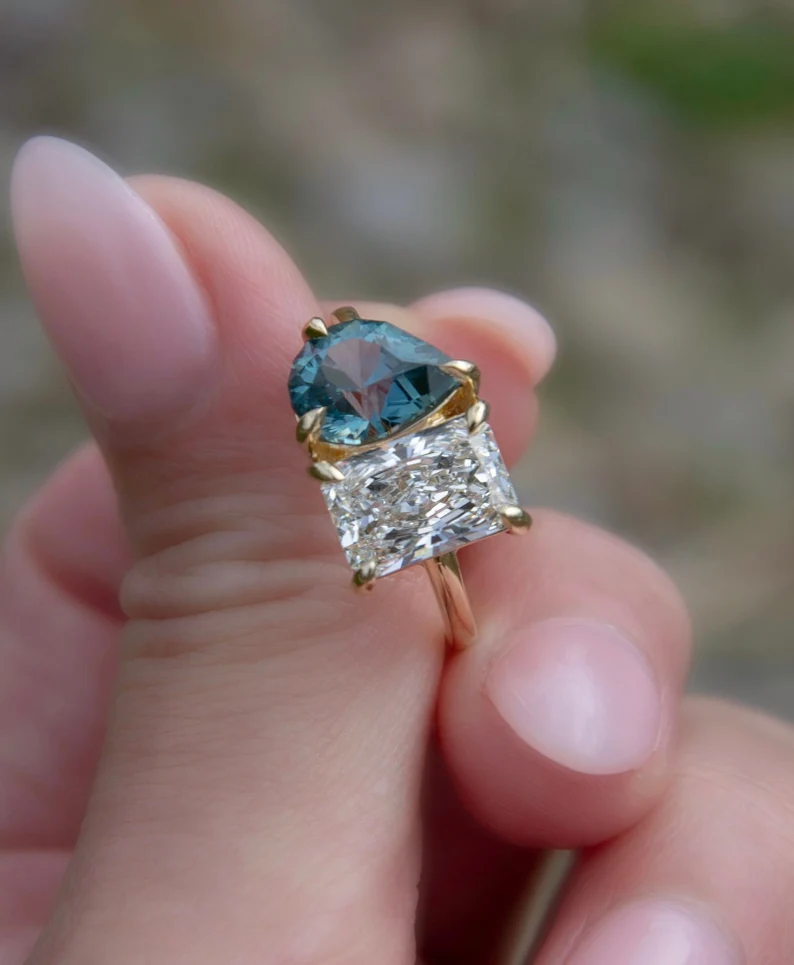
Stills provide inspectable detail for purchase decisions. Buyers of fine jewelry want to see clarity, cut, hallmarks and exact color. High-resolution stills (2000+ px on the long side) let customers zoom in on a 0.75 ct diamond (≈5.8 mm) to inspect inclusions or view the engraving on a wedding band. For e-commerce product pages, these details directly reduce risk perception.
Stills work better on product pages and ads aimed at conversion. Static images are faster to load, easier to compare side-by-side, and ideal for product grids and retargeting ads.
Production tips for compelling stills:
- Use macro lenses with focus stacking to get full depth of field (rings often need f/11–f/16 but stack multiple shots to avoid diffraction).
- Provide scale references — ring on a finger, pendant on a card showing mm measurements, or a ruler next to a stud earring (e.g., 5 mm round diamond vs 7 mm).
- Include at least one image showing metal hallmarks. For example: 18k yellow gold = 75% Au, 14k = 58.3% Au.
- Deliver images optimized: PDP images 2000–3500 px for zoom; thumbnails 800–1200 px for speed.
Which format works by price point and product type
- Under $500 (fashion / mass-market fine): Reels drive discovery. Still photos close the sale. Use both: a Hero Reel plus clean product shots.
- $500–$5,000 (everyday fine jewelry): Buyers look for lifestyle imagery plus inspectable detail. Reels increase engagement; stills reduce returns when they show scale and hallmarking.
- $5,000+: High-trust buyers want certification and detail. Use still photos (macro + certification close-ups) on the PDP and offer a short bespoke video or live viewing on request. Reels help brand awareness but are less decisive for the final purchase.
- Gemstone-specific: Fancy-color diamonds, alexandrite, opals and emeralds benefit most from motion because color and play-of-light change with angle. Diamonds and white sapphires still need large, sharp diamond-styled stills for clarity grading.
Cost, time and returns — the trade-offs
Reels usually cost more in creative time (storyboarding, multiple takes, editing) and require platform-specific assets (vertical cut, captions, subtitles). Still photography requires specialized gear and retouching but is faster per SKU once you have a shot setup.
Returns and expectations: Motion can lower returns by showing true scale and sparkle. But poorly lit reels that change color or over-saturate can increase returns if the product looks different in person. The rule: match lighting and white balance between reels and stills to keep customer expectations accurate.
How to test and measure (practical A/B plan)
Run a controlled test for 2–4 weeks. Here’s a simple plan:
- Select 8–12 SKUs across price tiers and styles (rings, pendants, bracelets).
- Create two variants per SKU: (A) high-quality stills only on feed and PDP; (B) stills + Hero Reel on social feeds, same stills on PDP.
- Run paid traffic with equal budgets to each variant and measure these KPIs: impressions, CTR to PDP, add-to-cart rate, conversion rate, average order value (AOV), and return rate after 30 days.
- Run each test until you have at least several thousand impressions per variant. Use statistical-significance tools to judge differences.
Typical outcomes you might observe: Reels produce higher CTR and more saves, but stills on the PDP often yield the higher conversion rate. The best long-term result is a hybrid where Reels feed the funnel and stills close it.
Checklist: Best asset stack for a fine-jewelry SKU
- Hero image (white/background) — 2000–3500 px.
- Macro detail images with focus stacking (hallmark, prongs, bezel) — 2–4 images.
- In-hand/model shot for scale (include finger size or neck measurement in description).
- 360° spin or short product clip (10–20s) for PDP.
- Vertical 9:16 Reel: macro sparkle, in-hand scale, text overlay with price or CTA, and a thumbnail from the stills set.
- Cert images (GIA or lab document) and metal composition note (e.g., 18k = 75% Au, rhodium-plated white gold noted if used).
Bottom line
Use both. Reels are powerful for discovery and showing life-like movement — essential for capturing attention and demonstrating sparkle and color change. Still photos are indispensable for inspection, trust and conversion on product pages. For most fine-jewelry sellers the optimal approach is a hybrid: invest in a reusable stills setup for all SKUs and produce short, high-quality reels for hero items and social campaigns. Measure outcomes with A/B testing and adjust by price tier and gemstone type.